 |
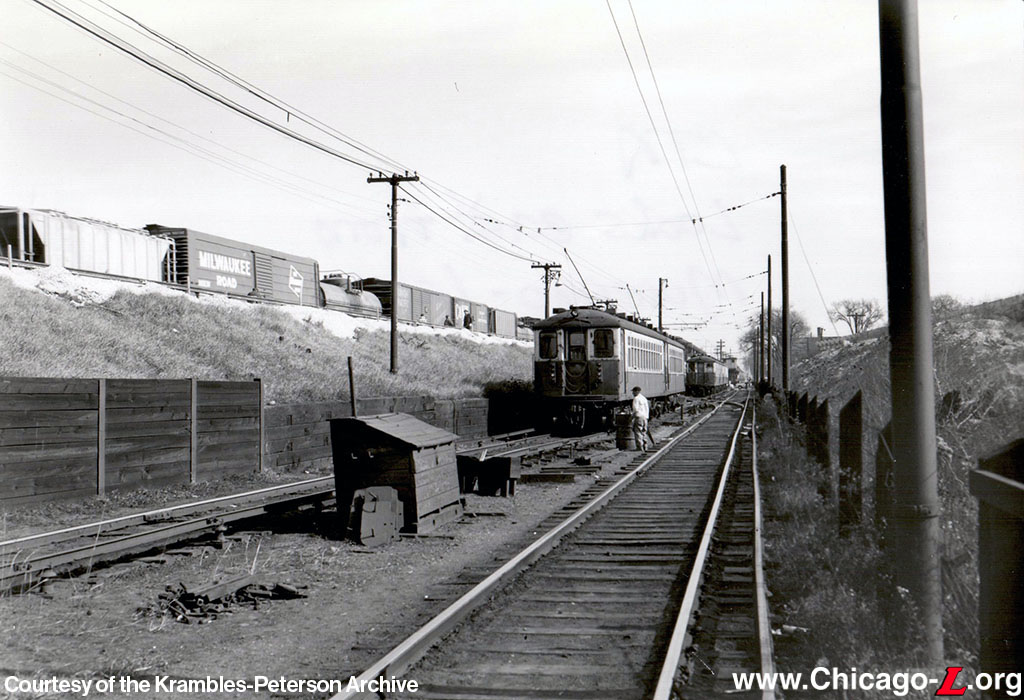
ROW@ElginXover_19620000.jpg (185k)
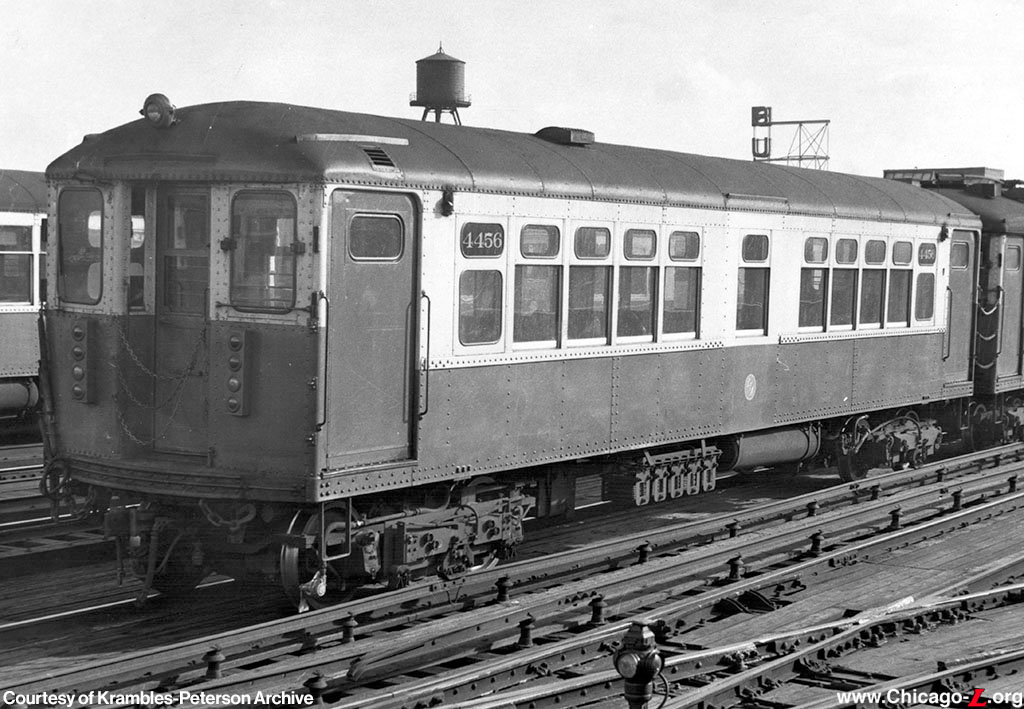
This 1962 view looks east on the west end of the ground-level portion of the Lake Street "L" at the Elgin crossover that controlled access in and out of the Forest Park terminal. The diamond crossover allowed trains entering and leaving the terminal to change tracks as needed--for instance, the closer 4000-series train is leaving the terminal, and will cross over to the other track (the inbound main line track) at the crossover, allowing the other 4000-series train ahead of it to enter the terminal. Note that there is both overhead and third rail along both tracks -- the ground-level portion of the Lake Street "L" ran on overhead wire for safety, and trains to and from the main line would enter and leave Forest Park terminal with the poles up and powered by the overhead. However, the third rail was installed just on the tracks between Harlem Avenue and the Forest Park terminal to facilitate switching operations, such as moving trains from one terminal track to the other, or breaking apart consists of trains to remove or shuffle cars, without having to raise trolley poles, making terminal operations more efficient. (Photo courtesy of the Krambles-Peterson Archive) |
 |
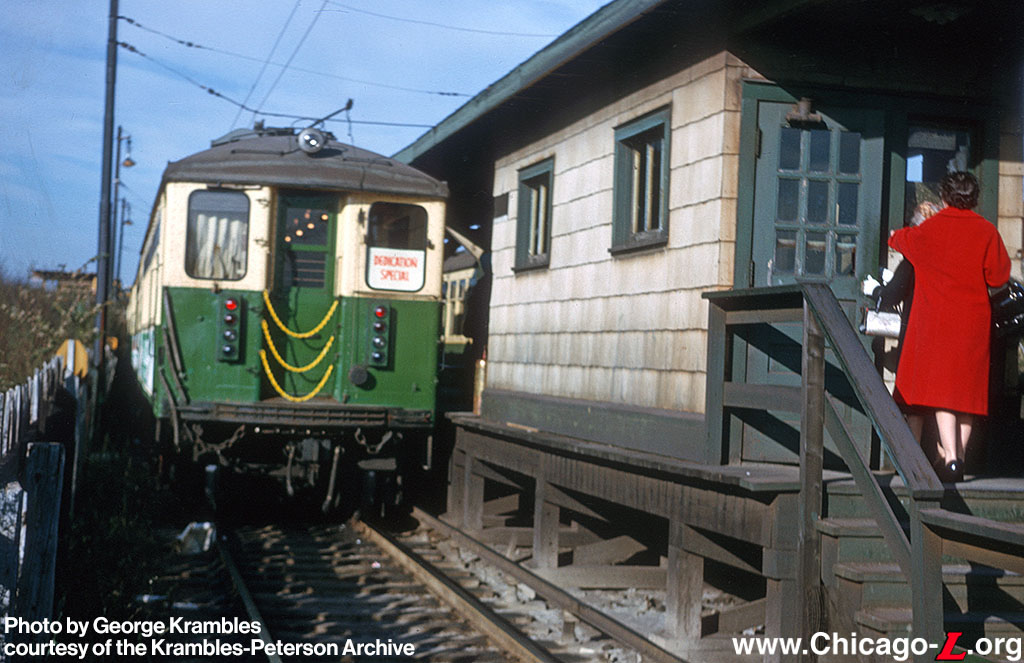
forestpark_19621027.jpg (181k)
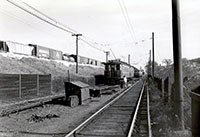
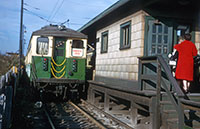
The Forest Park station house is seen looking west on October 27, 1962. The 4000-series train in the station on the left is the dedication train for the newly elevated Lake Street "L" tracks through Oak Park and Austin, as denoted by its front destination sign. The dedication of the new facilities took place that day, Saturday, October 27, and the line between Forest Park and Laramie was closed that weekend (with a bus substitution) through 6pm Sunday to make the new track connection west of Laramie, meaning the Forest Park station was probably closed to the public in this photo. (Photo by George Krambles, courtesy of the Krambles-Peterson Archive) |
 |
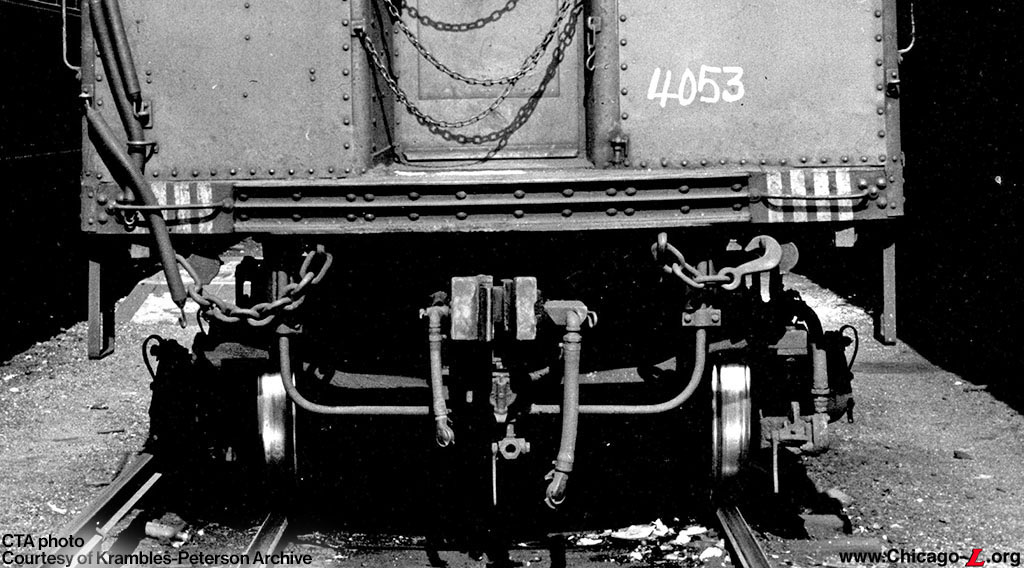
cta4053_19510300_enddetail.jpg (178k)
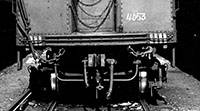
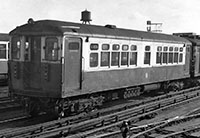
Car 4053 was photographed as part of CTA's creation of the March 1951 "Equipment File" photographs. Good undercar lighting of this view shows both the center trip (in line below the coupler) and the side trip to the right of the right-hand running wheel. The air cocks that would engage a raised trip also show to advantage in this view. The four-stripe marking (on either side of the car's anticlimber) indicates it has received remote door control equipment. (CTA photo, courtesy of the Krambles-Peterson Archive) |
 |
cta4456_19561227.jpg (197k)
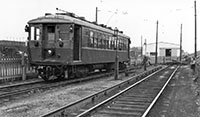
Car 4456 was a 1955 work product of Skokie Shops, combining electrical equipment from fire-damaged motor 4111 with the body of control trailer 4005. Photographed in the Logan Square Yard on December 27, 1956, this car reflects the Authority's policy to have only side trip equipment on the steel cars. (Photo courtesy of the Krambles-Peterson Archive) |
 |
cta4427_1948late_ERIStest-ForPk.jpg (153k)
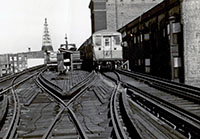
Car 4427 is on the tail track beyond the west end of the Forest Park station platform in late 1948. The photo was documenting the car's use during tests of a prototype Electronic Range Indicating System (ERIS), a radar-based signaling system developed by RCA using technology and experience gained during the second World War. (Photo by Barney L. Stone, courtesy of the Krambles-Peterson Archive) |
 |
cta4000s_1948late_ERIStest-DorJP.jpg (209k)
A 4000-series train is seen approaching Dorchester station in late 1948 or 1949, during tests of the prototype ERIS. The final report for the ERIS tests noted that field testing began using the center track on the Jackson Park branch, seen in the middle foreground and whose east end is here at Dorchester. After that, testing moved to the South Side Mainline middle track and then up to the area around Sedgwick on the Ravenswood. (Photo by Barney L. Stone, courtesy of the Krambles-Peterson Archive) |