 |
mwserr262_motorcab.jpg (297k)
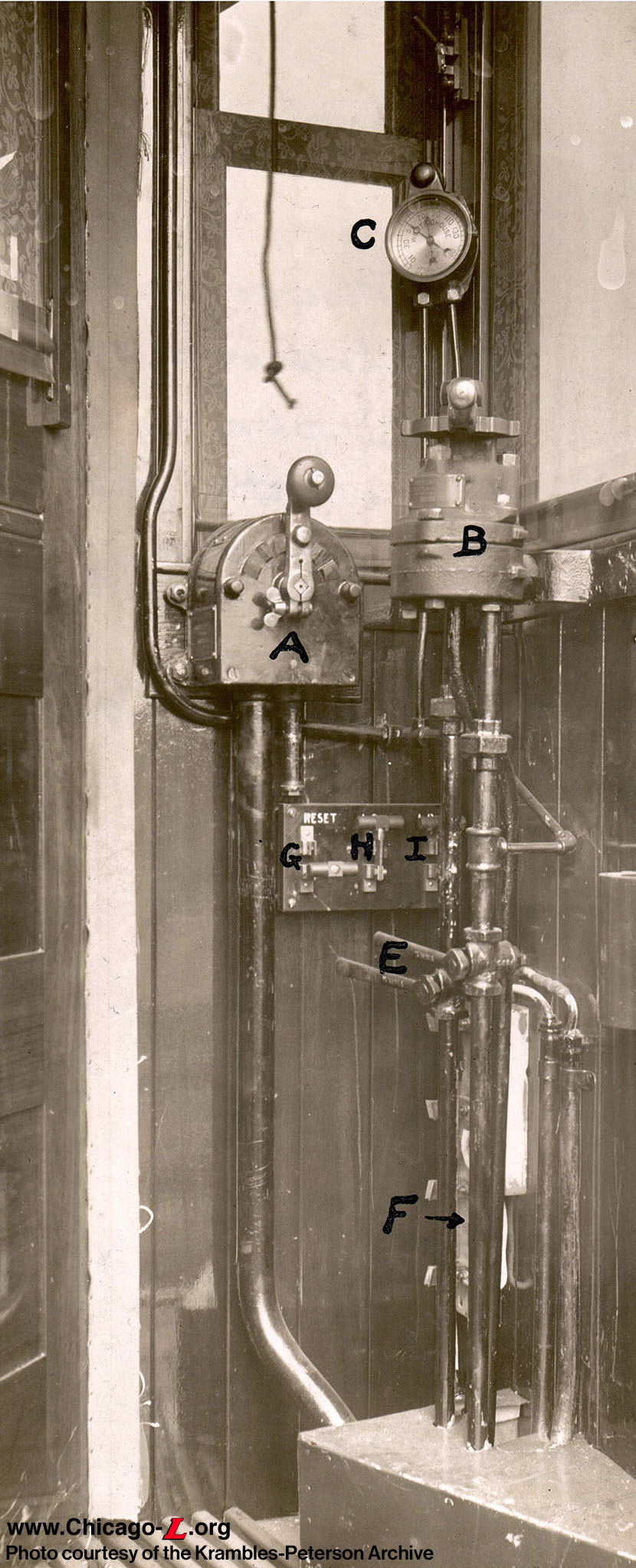
After Metropolitan West Side Elevated car 262 was rebuilt with closed vestibules and air doors (American Car & Foundry, 1907), this view of the motorcab controls was made. Various elements were labeled A through I for reference. The identified equipment is as follows: Item A is the WH-11 master controller (sometimes referred to as a "sidewinder", due to its vertical mounting rather than the more typical horizontal mounting for a controller, resulting in the motorman rotating the controller handle side-to-side to operate it); item B is the engineer's brake valve; item C is the duplex gauge; item D (out of this view) is the whistle valve; item E is the air brake cut-out cock; item F is the line switch cut-out; and item G is the reset switch. H and I are battery cut-out switches. (Photo courtesy of the Krambles-Peterson Archive) |
 |
cer_woods_1913_52nd.jpg (188k)
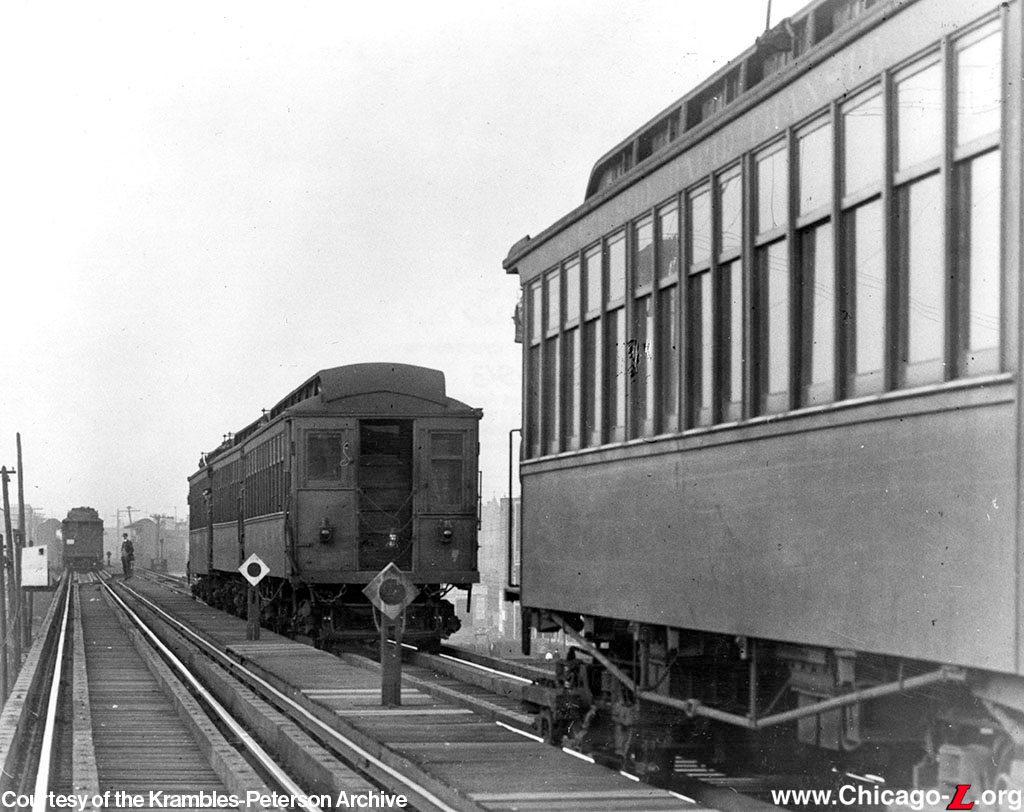
Spacing boards installed on the center footwalk are seen on the South Side elevated at 52nd Street keeping two trains of wood-bodied "L" cars safely distanced in 1913. (Photo courtesy of the Krambles-Peterson Archive) |
 |
crt1143_19370206 _underframe.jpg (222k)
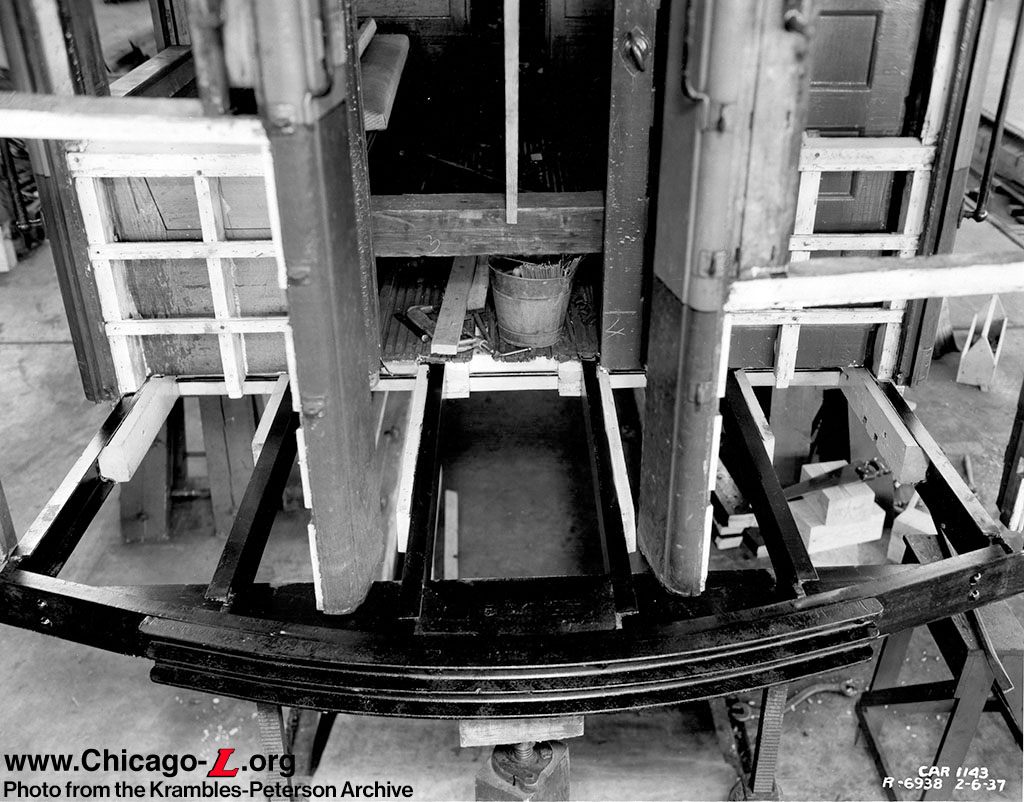
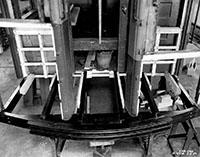
One of the results of the collision at Granville in 1936, where a heavy-weight steel North Shore Line train hit a wood-bodied car at the rear of an "L" train, was the Illinois Commerce Commission ordering the installation of six through channels in the underframes/end sills of the wood-steel cars. Here, car 1143 is in the process of being modified in accordance with the ICC order. (Photo courtesy of the Krambles-Peterson Archive) |
 |
nwe769-series_1909_front.jpg (190k)
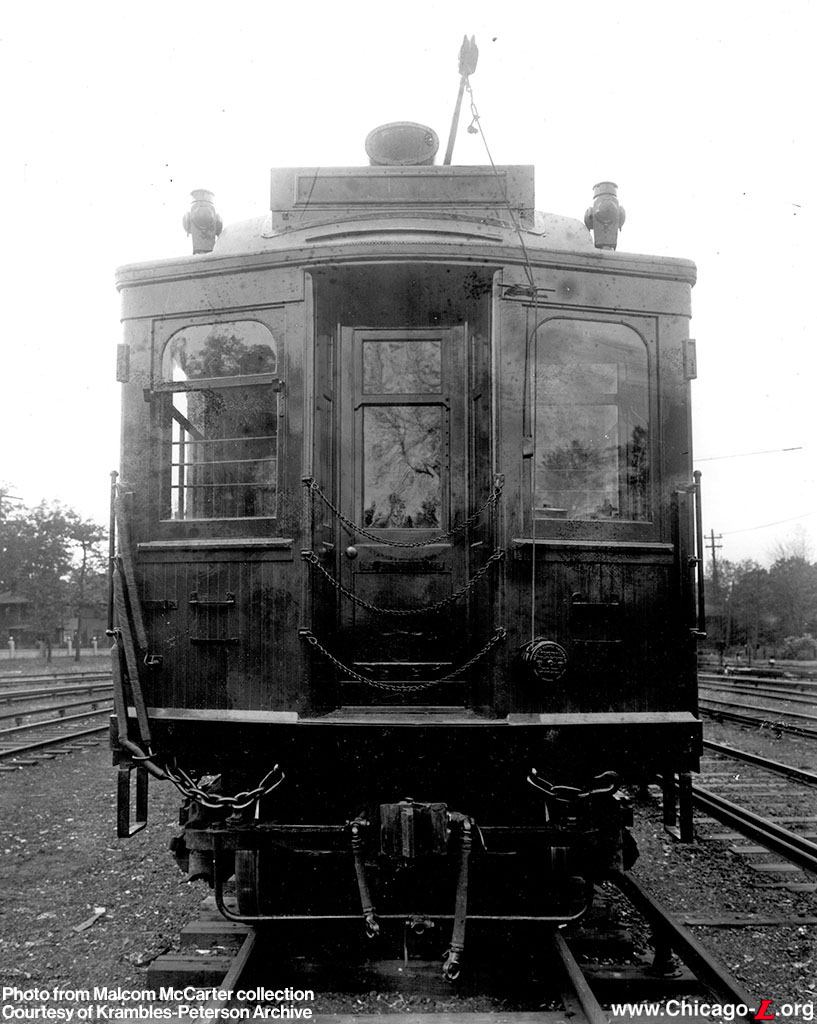
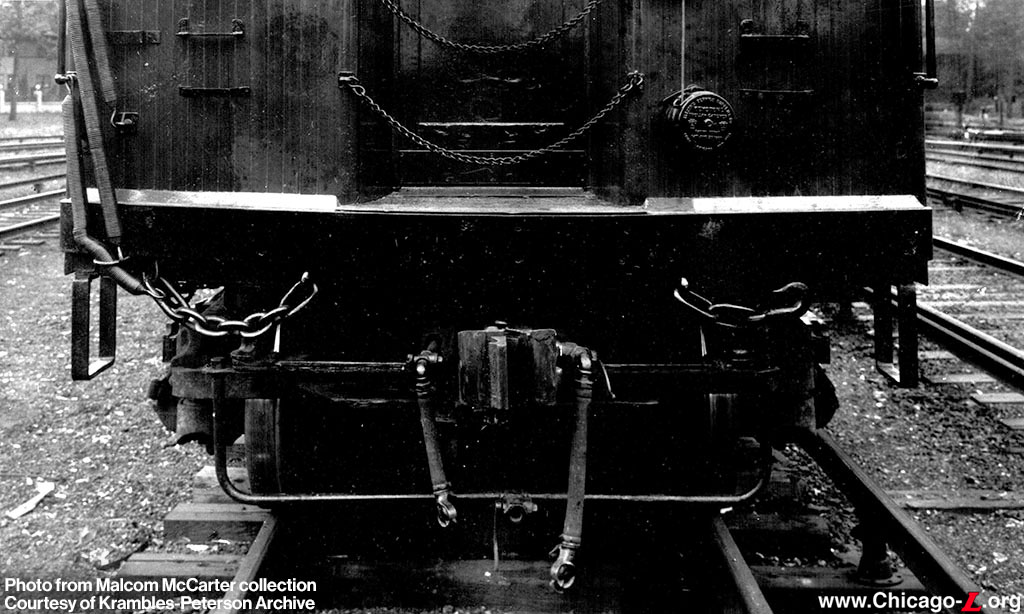
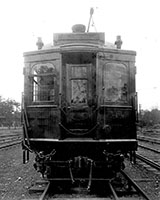
The end of a Northwestern Elevated (NWE) 769-class motor car is seen shortly after delivery from Pullman in early 1909. The air valve and cock handle can be seen below the coupler and between the air hoses on the approximate centerline of the car -- eventually, all motor and control trailer cars in the Chicago Elevated Railways (CER; later, Chicago Rapid Transit [CRT]) fleet would be equipped with a variation of this safety installation. (Photo from the Malcolm McCarter Collection, courtesy of the Krambles-Peterson Archive) |
 |
nwe769-series_1909_front-detail.jpg (187k)
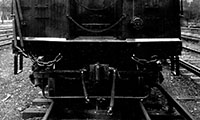
A close-up view of the area under the NWE 769-class car's anticlimber provides a touch more detail on the installation used to equip these cars with the air-operated center trip device. Below the air valve, one can see the trip cock handle extending further down, which would cause the train's emergency brakes to apply if a signal were passed displaying a "stop" indication, due to collision with the wayside trip. (Photo from the Malcolm McCarter Collection, courtesy of the Krambles-Peterson Archive) |
 |
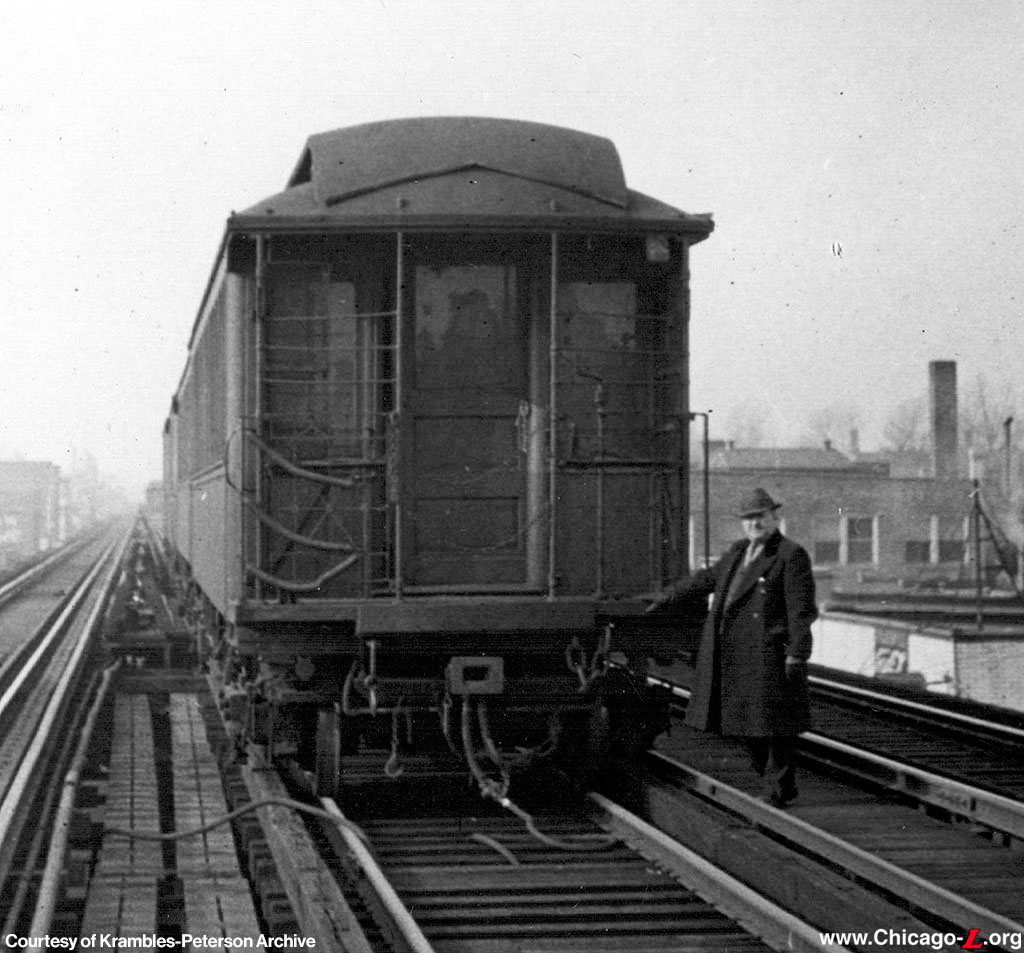
crt181-series_1937circa.jpg (206k)
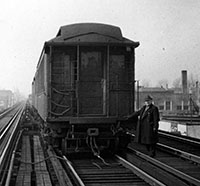
Although primarily to act as a safety device to enforce a trip-equipped signal's stop indication by activating the car's brakes, the presence of the air valve at the ends of the motor and control trailer cars made it easier for CRT to use this equipment to support other needs. Here, a train of 181-class cars has air hoses connected to support the work of a structural repair gang on the Jackson Park branch circa 1937. (Photo courtesy of the Krambles-Peterson Archive) |