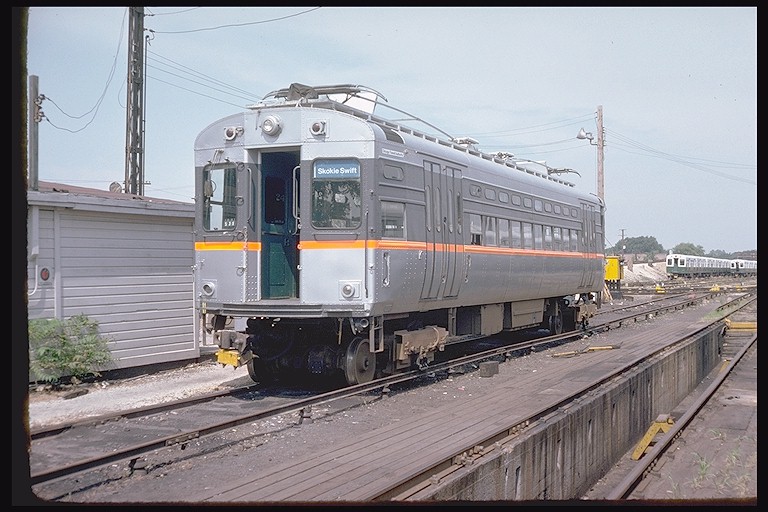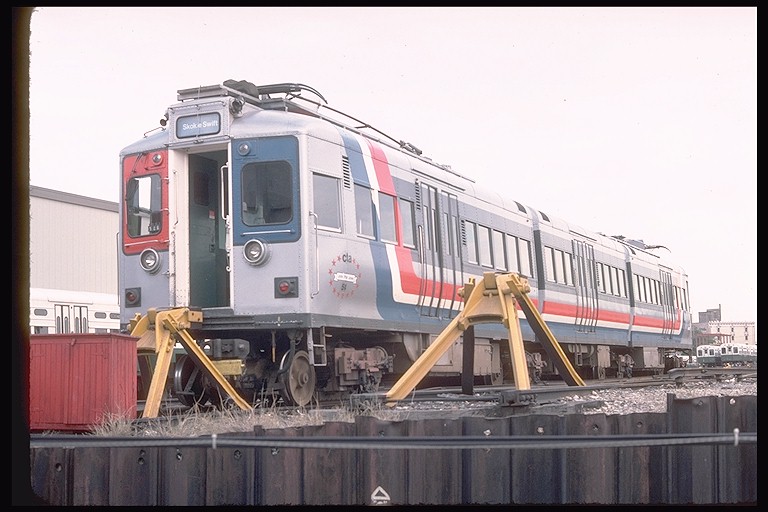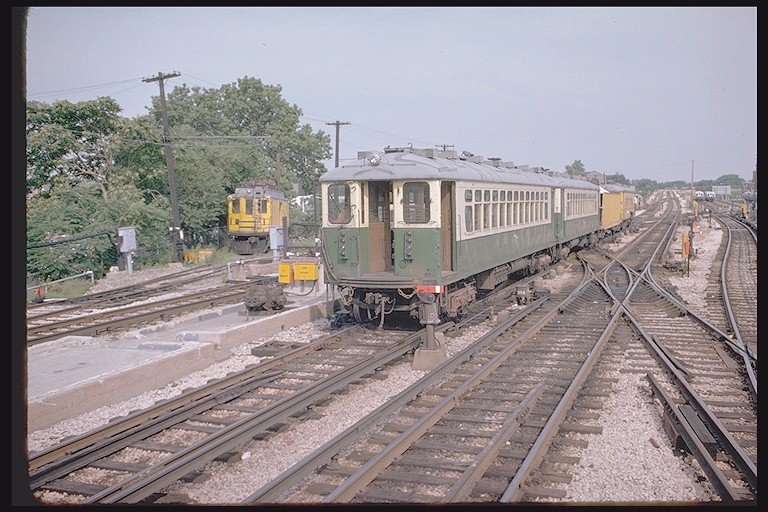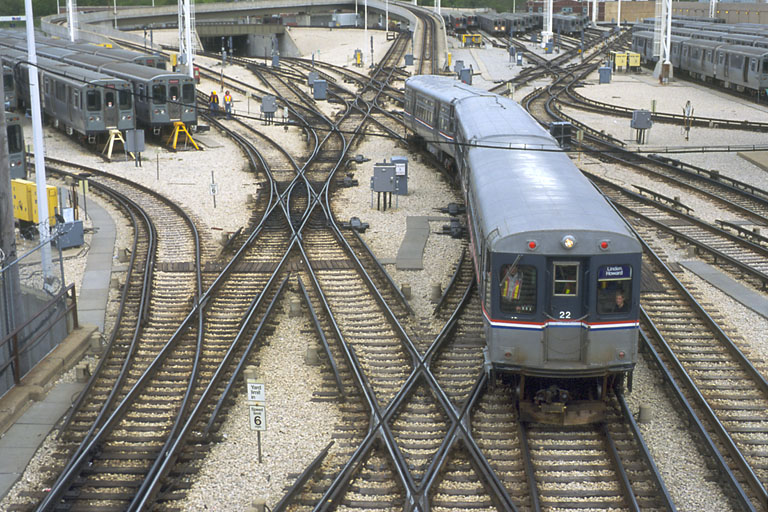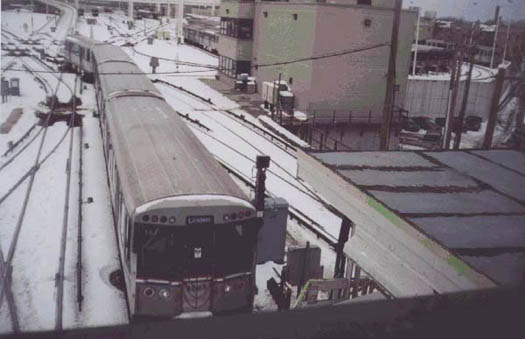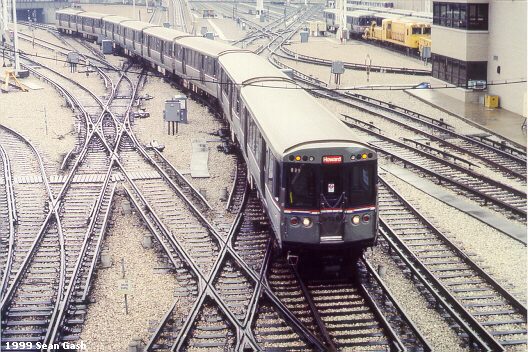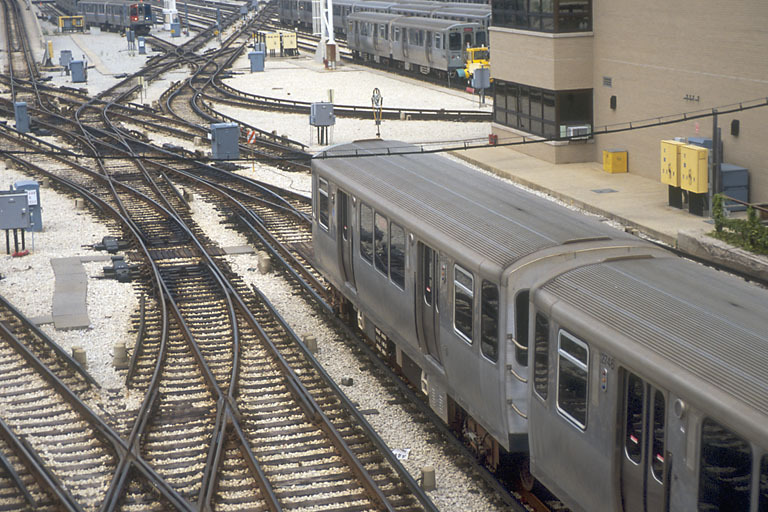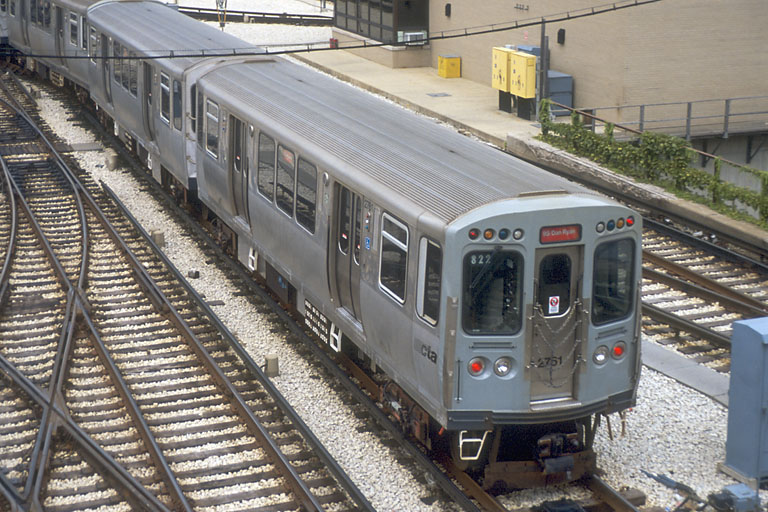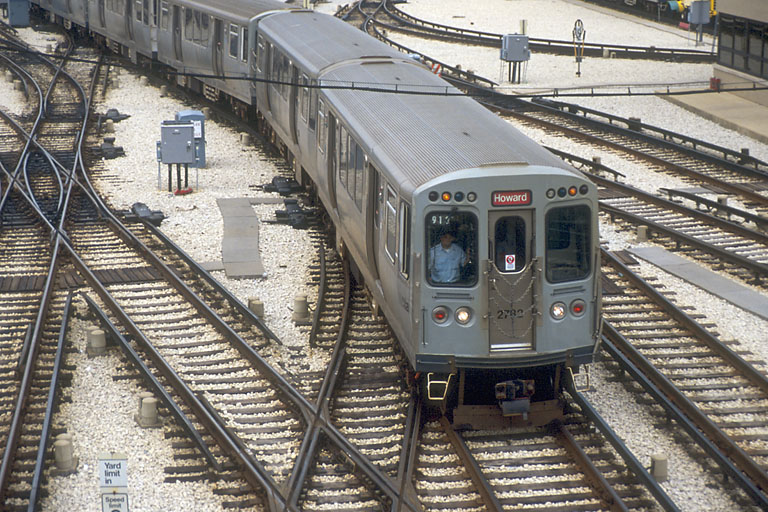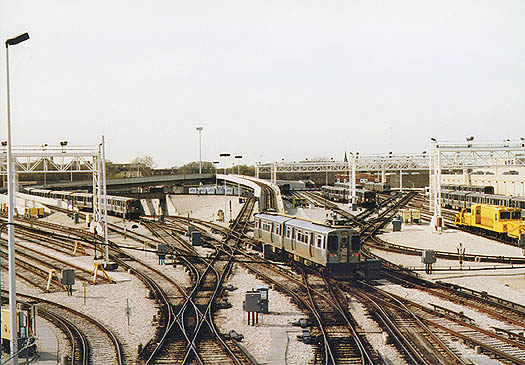
A Skokie Swift
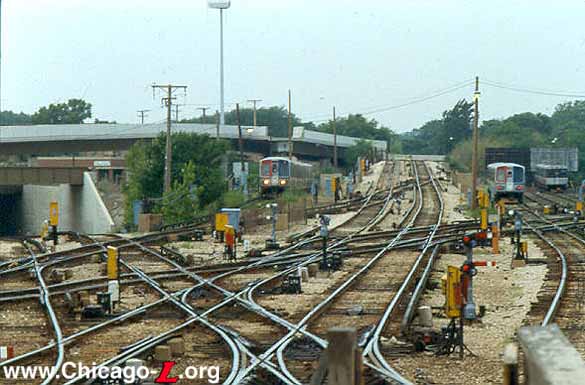
3200-series
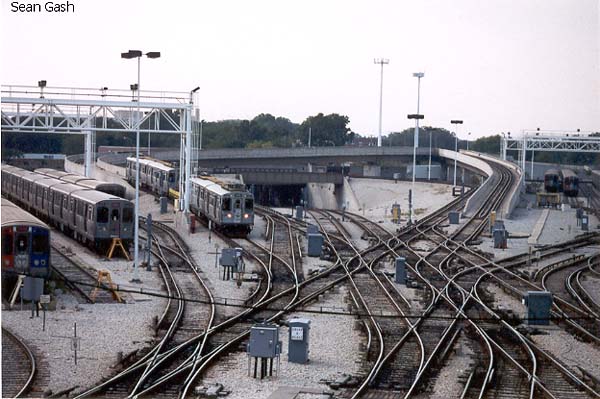
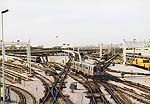
train sets off for Dempster
Street through
Howard Yard, looking north on April 10, 1998. The ascending
tracks in the center and on the left in the background lead
to the Purple (Evanston) Line, while the descending tracks
on the left (going under the Evanston tracks) are the Yellow
Line (Skokie Swift). (Photo by
Sean Gash)
|
Howard Yard &
Shop
Juneway Terrace and
Paulina Avenue, Rogers Park
Service
Notes:
|
Services:
|

|
Red Line:
Howard
|

|
Purple Line:
Evanston
|

|
Yellow Line:
Skokie Swift
|
Quick Facts:
Address: 1825 W. Juneway
Terrace
Established: 1919
Shop Area: 95,000 square feet
Yard Area: 653,400 square feet
Rebuilt: 1991-93
Status: In Use
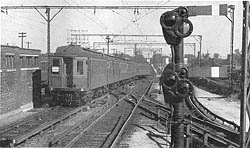
A southbound Jackson Park
Express train pulls through the electro-pneumatic
interlocking in the Howard Yard as it approaches the station
circa 1943. Although the "L" utilized third rail south of
Howard, overhead operation still predominated on the
Evanston branch and for all North Shore Line trains. For a
larger view, click here. (Photo from the George Krambles
Archive) |
The origin of the Howard Yard is meager, dating back to the
opening of the Evanston Division of the Northwestern Elevated
Railroad. On May 16, 1908, the Northwestern was extended north of
Wilson to Central Avenue in
Evanston over the electrified tracks of the Chicago Milwaukee &
St. Paul Railroad. A small yard was provided at Central and a siding
at the Chicago city limits at Howard Street for the storage of cars
between rush periods.
Several changes took place on the Northwestern Elevated in the
late 1910s. Elevation of the tracks between Wilson
and Howard began in 1914,
but was slowed due to materials and manpower shortages caused by
World War I. (The tracks north of Howard
to University Place in Evanston were raised in 1910.) As part of the
elevation process, a new yard was built north of Howard
station, opening in 1919. With a larger car storage capacity, a
number of trains now began and ended their runs at Howard.
(Previously, most trains continued to the end of the line at
Linden.) In 1923, a
then-state-of-the-art electro-pneumatic interlocking system was
placed in operation at the yard.
The layout through and around Howard Yard was altered in 1925, when
the Niles Center branch was constructed between Howard
and Dempster
Street. Still, at this point all of the yard tracks were on the
northwest side of the Evanston branch right-of-way. There were no
formal shops to speak of; the North Side Division's primary
maintenance and overhaul facilities were still located at Wilson
Shops further down the line. There was, however, a Commonwealth
Edison substation between the Evanston and Niles Center tracks at
Chicago Avenue and two tracks had work pits beneath them at the south
end of the yard. In the north end of the yard, near the corner of
Chicago Avenue and Juneway Terrace, one storage track curved west
around the stub ends of the other storage tracks, terminating just a
bit east of the embankment carrying the Evanston branch's tracks over
Chicago Avenue.
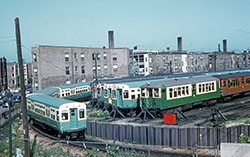
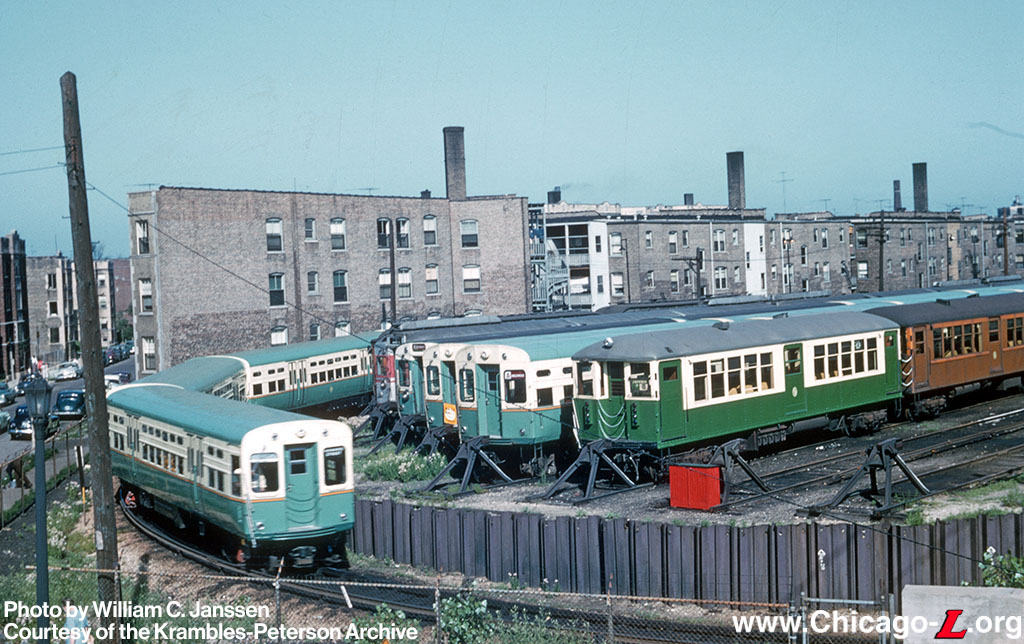
A train of 6000-series cars makes its way around the loop track in Howard Yard to turn around on July 4, 1954, passing a wide variety of passenger rolling stock laid up on the storage tracks, including (from left to right) a 5000-series car in its original paint scheme, various 6000-series cars of both the 6001-type and 6200-type configurations, and a train of 4000-series cars in both the then-new everglade green and cream livery and CRT-era orange and brown paint. For a
larger view, click here. (Photo by William C. Janssen, courtesy of the Krambles-Peterson Archive) |
Still, despite expansion, the Howard Yard was of modest quality.
The only repair pits were on the unsheltered south tracks, unbearably
hot in summer and bitterly cold in winter. Car washing was done
outside and by hand, using long handled brushes, but obviously only
when weather permitted.
After the CTA took over
operation of the "L", several
changes took place at Howard Yard. The curved storage track at the
northwest corner of the yard was extended beneath the Evanston Line tracks and around back to the Howard
station. The Howard loop track, completed and opened for operation
on February 10, 1950, allowed North-South Route trains to turn around
without changing ends by simply traveling through the yard on the
loop track and back to the station (an act sometimes referred to as
"going around the horn" by jargon-speaking motormen). This not only
saved time but also evened out wheel-wear on the cars. On October 15,
1954, automatic block signals were put in service on the loop track
to improve safety.
Through the years, several improvements and upgrades were added to
the yard. On April 13, 1954, regular operation of the first
mechanical washer for rapid transit cars began at Howard Yard. In
1974, construction commenced on a shop building (up until that point,
all heavy shop work on the North Side had to be done at Wilson
Shops); on April 29th, tracks #8-N and #9-N had to removed from
service to allow construction to progress.
Yard Renovation and Expansion
By the mid-1980s, it was decided that the through-routes of the
North-South Route and West-South Route should be switched. The Howard
Line trains would cease to be through-routed to the Englewood and
Jackson Park branches and would instead terminate at 95th
Street on the Dan Ryan Line. This would create a more balanced
service level, but several infrastructure projects were required to allow this realignment of the through-routes to take place, including construction of a new Dan Ryan Connector subway linking the State Street Subway with the Dan Ryan Line, and a rebuilt Addison station to provide more efficient train movements. The switch would also greatly increase car requirements on the new Howard-Dan Ryan route, requiring expansions of both 98th and Howard yards. While most of the Howard/Dan Ryan project was the responsibility of the City of Chicago Department of Public Works, design and construction of the Howard Yard improvements was handled by the CTA.
The Howard Yard reconstruction program would increase storage capacity from 150 to 262 railcars, but it included more than just additional tracks -- the scope of the project included several improvements aimed to address a number of issues at Howard, and for North Side car storage and maintenance in general. The reconstructed yard would include a new maintenance shop along the north side of the yard. The 26-car shop would provide inspection and sub-unit replacement for cars assigned to Howard Yard, and would ultimately replace not only the small 4-car shop at Howard but also the century-old maintenance shop at Wilson -- primary shop activities would be switched from Wilson to the Howard
Shop. The reconstructed yard included grade separation for the Evanston and Skokie Swift lines -- the Skokie tracks descended into a depressed cut while the Evanston tracks ascended into new, high aerial alignments north of the station and interlocking north of the station, providing separation between those main line tracks and any yard movements. A new turning loop was also included for North-South trains. Train movements would simplified and any switching conflicts removed between Evanston and Howard trains during rush hours. Other improvements in the project included new interlockings south of Howard station and north of the station, throughout the yard, with a modern solid-state microprocessor
controlled interlocking plant using "entrance-exit" technology; a new main interlocking control tower (as well as smaller local control house for the south interlocking), and a dedicated fifth track south of Howard station to act as a turnback stub for Skokie and Evanston shuttle trains.
The Howard Yard reconstruction project was expansive in scope, required nearly 10 major construction contracts, and took about a decade to complete -- service had to be
maintained while construction took place, complicating the construction schedule. Preliminary work was underway by the mid-1980s. By mid-1987, construction of the new twin-span aerial flyover structures for the Evanston Line was well underway. on December 1, 1989, the new interlocked double crossovers between Tracks 1 and 2 and between Tracks 3 and 4 north of Jarvis was placed in service. The Howard Transportation Office moved to first floor of the new Howard Tower on March 18, 1990, though this would prove to be a temporary home. The new Track #5 stub south of Howard for turning shuttle trains came into use on May 20, 1990.
Construction of the new Howard Shop started by early 1991. The J. H. Pomeroy Company, of Roselle, IL, was the lowest bidder for the contract to build the $16,155,000 shop. The buff-colored brick building has a floor area of 41,500 square feet and is located at the northeast corner of the yard, along N. Haskins Avenue. It is a single story at track level in the yard, but because the yard is elevated it actually extended two levels down with a ground-level frontage along the street. The maintenance shop, designed with a 26-car capacity, features an 8-car wash bay for year-round exterior washing, with equipment to recycle wash water. There are three built-in floor hoists, each capable of raising two cars about five feet high to change and service undercarriage equipment. The building house an 8-car pit track for inspecting and trouble diagnosis, with an enclosure at one end for a "blow-down" to clean undercarriages prior to inspection. The basement level has a loading dock and freight elevator. Funding for the new shop was provided by the federal Urban Mass Transportation Administration, the Illinois Department of Transportation, and the RTA. Completion of the facility was expected in mid-1992.
On June 25, 1991, the new Howard South
interlocking was complete and on September 30, a new turnback loop
was completed at the north end of the yard. Also on September 30, the new structure and flyover track for southbound Evanston trains was placed in service; northbound trains continued to use the old track and bridge over Chicago Avenue for a while longer.
By August 27, 1992,
storage capacity at the Howard West Yard, the tracks on the west side
of the Skokie and Evanston branch tracks, was increased from 84 to
120 cars. On November 16, the new Howard South Yard was completed.
Work at Howard was still underway when the reroute of the Howard and Dan Ryan lines took place on February 21, 1993. On January 15, 1994, the new
Howard North Yard was completed and placed in service at 1000 hours,
thus completing the track reconstruction at Howard Yard. Storage
capacity was now at 310 cars.
Today, the Howard Yard and Shop serve the Red Line (Howard-Dan
Ryan), Purple Line (Evanston), and Yellow Line (Skokie Swift).
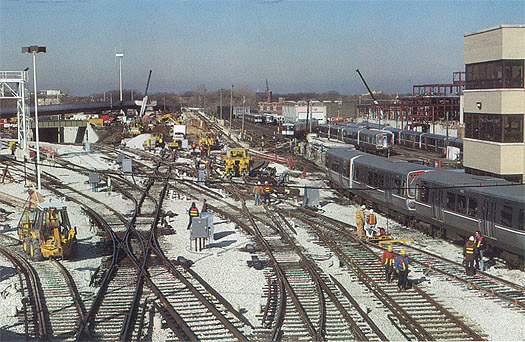
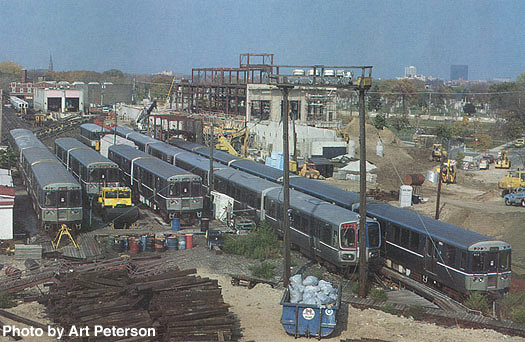
Reconstruction of the Howard
Yard continues in this view looking north on November 21,
1991. The new approaches to the Evanston and Skokie Swift
Lines are well underway here and much of the new yard
trackage has been laid. But it would still be another two
years before the project would be completed. A variety of
equipment is visible here: in addition to the numerous work
cars, 6000-,
2000-
and 2600-series
cars are all in evidence. (Photo
by Art Peterson)
|

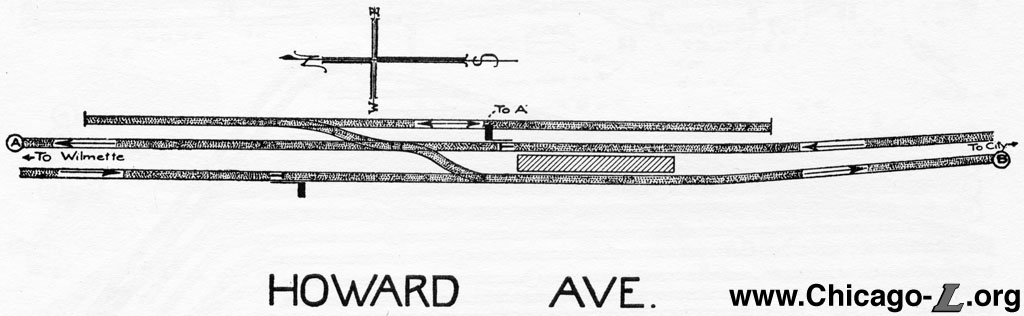
- 1913 - Howard Ave track map (72k): From Instructions to Trainmen in Connection with Through Routing: "At Howard Avenue there is a storage track, and at this point cars are added and cut from Evanston trains, in either direction, during the A.M. and P.M. rush periods. Switches at this point are operated by hand, green and white signals being displayed on switch stands."
Instructions to Trainmen in Connection with Through Routing, issued by CER to employees (1913) and reprinted in 1967 as Chicago Elevated Railroad: Consolidation of Operations, 1913. Graham Garfield Collection
.
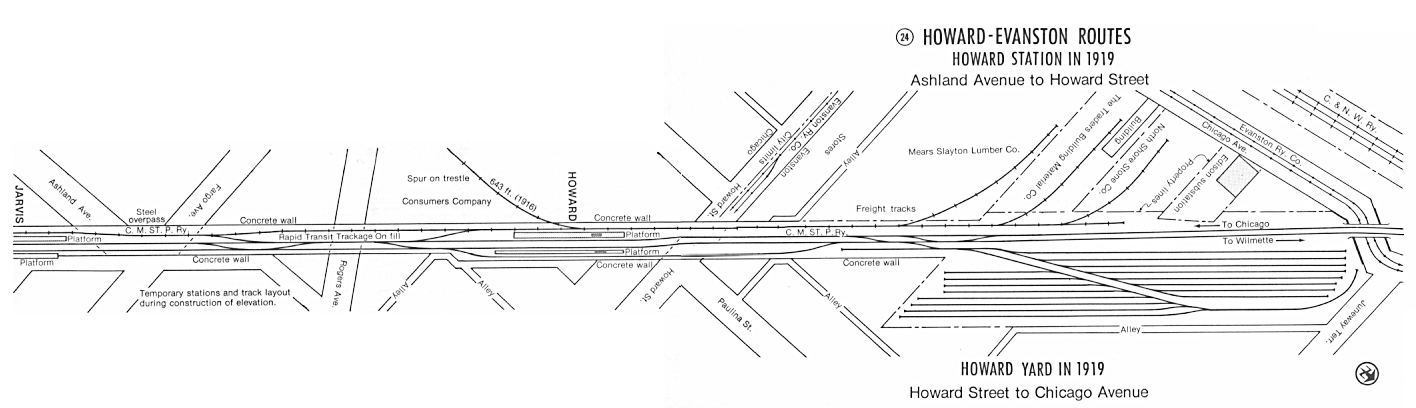
- 1919 Howard
Yard track map (205k)
Map from Chicago's Rapid Transit Volume
II: Rolling Stock, 1947-1976
.
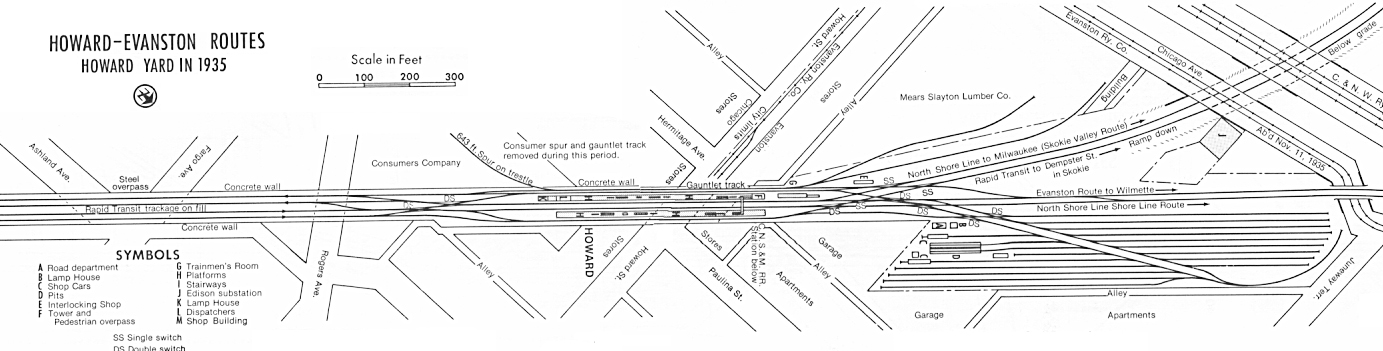
- 1935 Howard
Yard track map (243k)
Map from Chicago's Rapid Transit Volume
II: Rolling Stock, 1947-1976
.
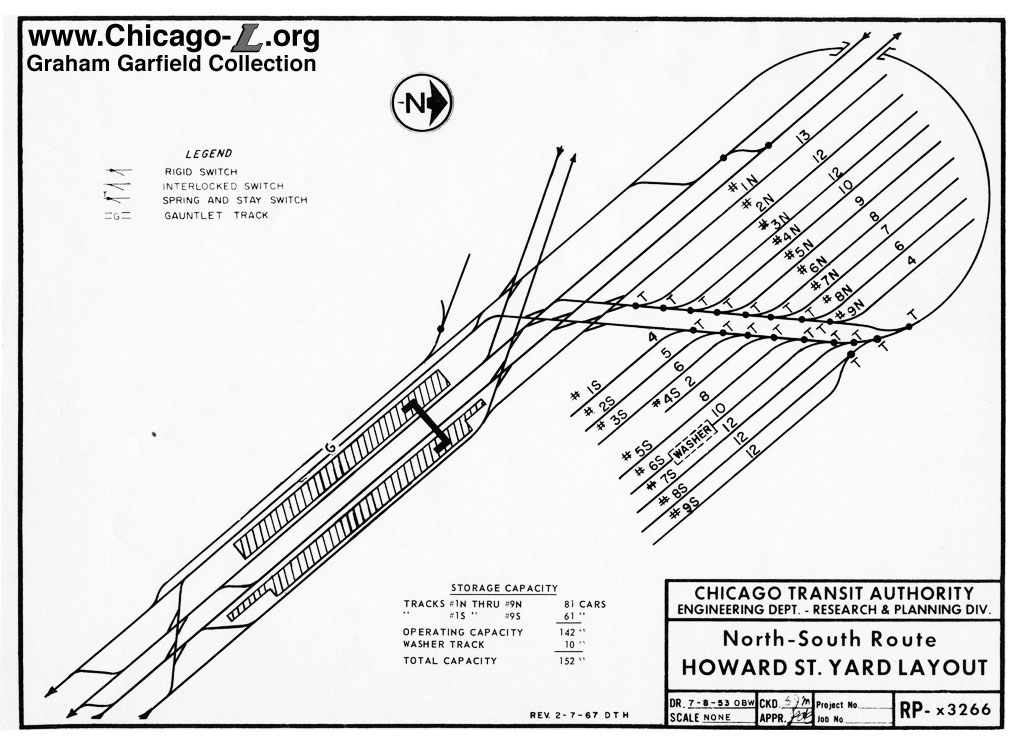
- 1967 Howard
Yard track map (183k)
CTA track map, from the Graham Garfield Collection
.
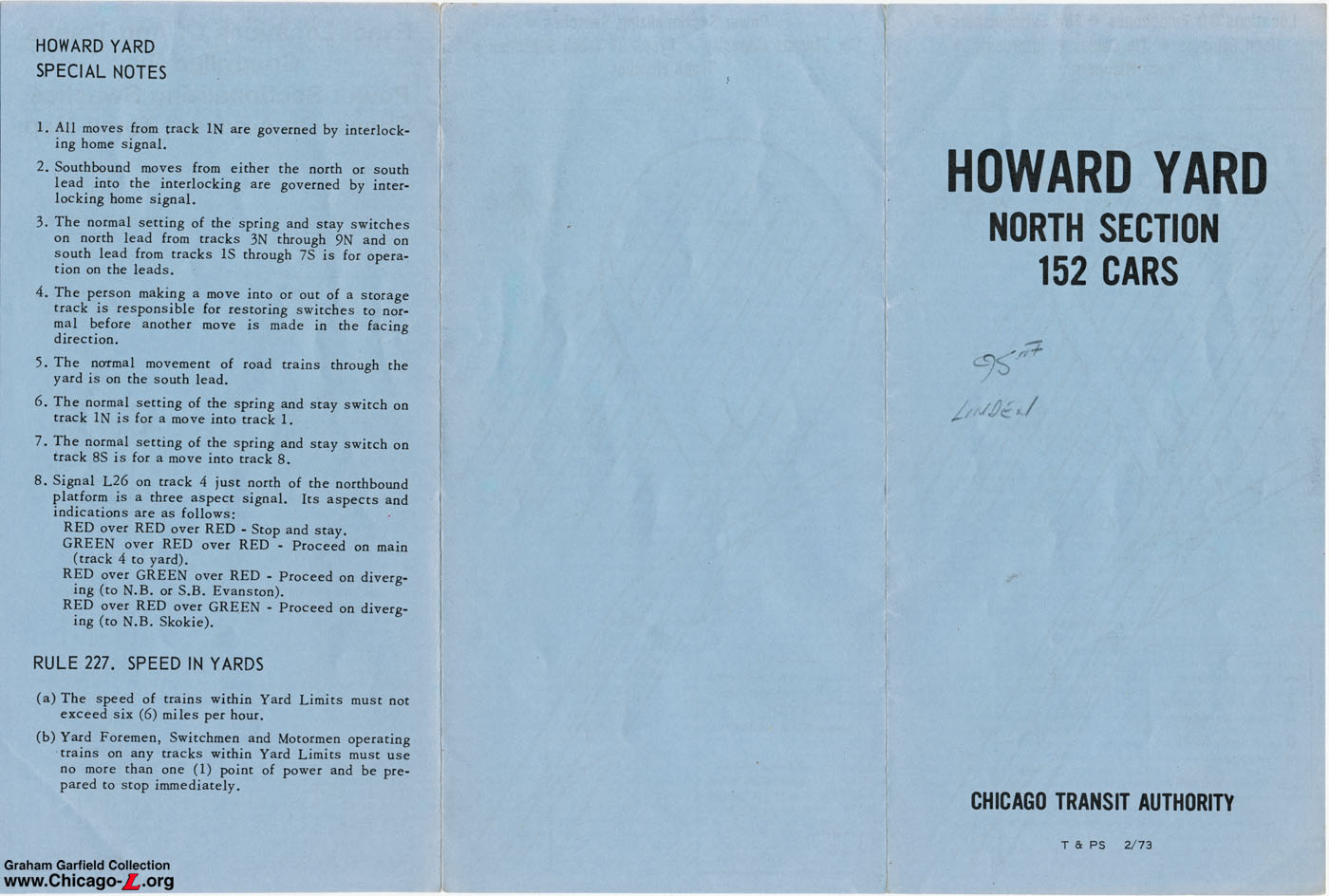
- Howard Yard Training Pamphlet, 1973 -- Page 1 (205k) | Page 2 (331k)
CTA training literature, from the Graham Garfield Collection
.
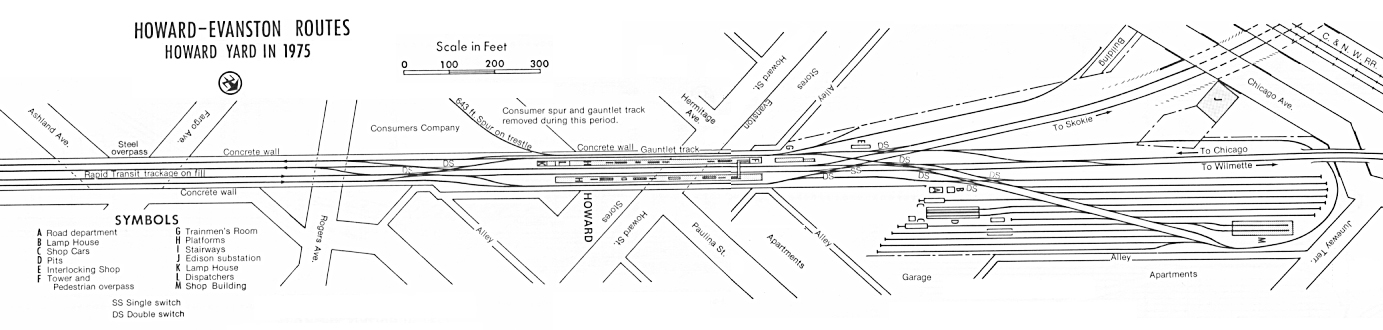
- 1975 Howard
Yard track map (209k)
Map from Chicago's Rapid Transit Volume
II: Rolling Stock, 1947-1976
.
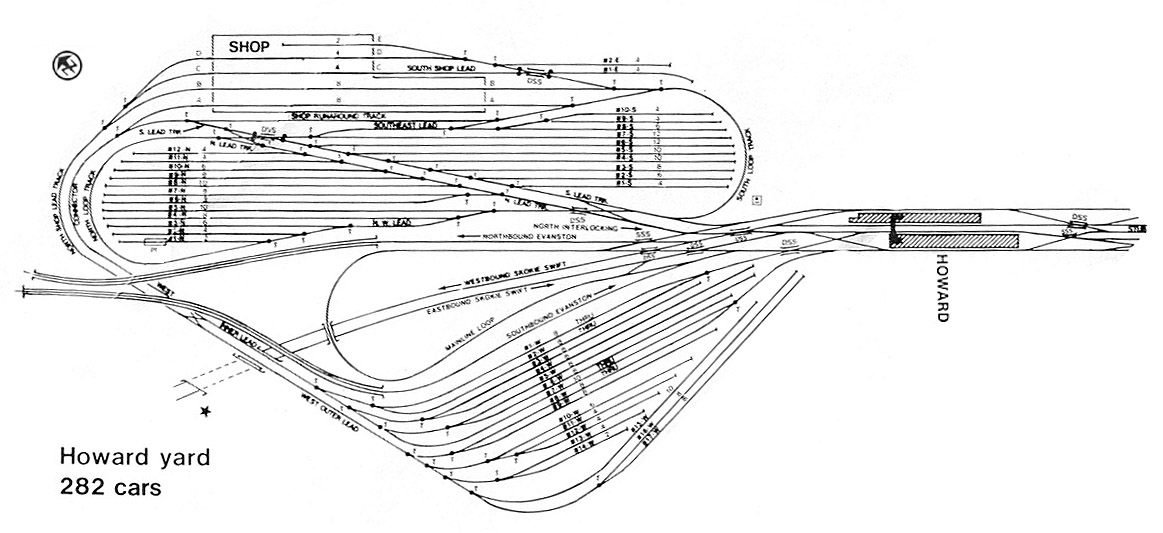
- 1994 Howard
Yard track map (141k)
Map from Chicago Transit
Authority

 |
howard01.jpg (64k)
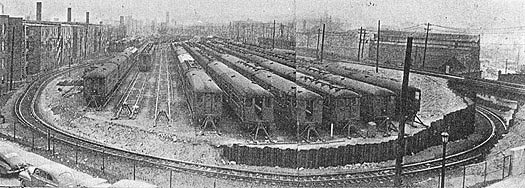
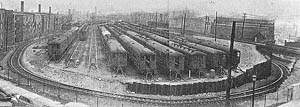
The new terminal loop in the Howard Yard has just recently opened in this view looking southeast from the corner of Chicago Avenue and Juneway Terrace in early 1950. All the train on the North-South Route are 4000-series -- seen here parked in the yard -- because of the restriction on operating wooden cars in the subway. (Photo from the CTA 1949 Annual
Report) |
 |
ctaS-104_S-105.jpg (127k)
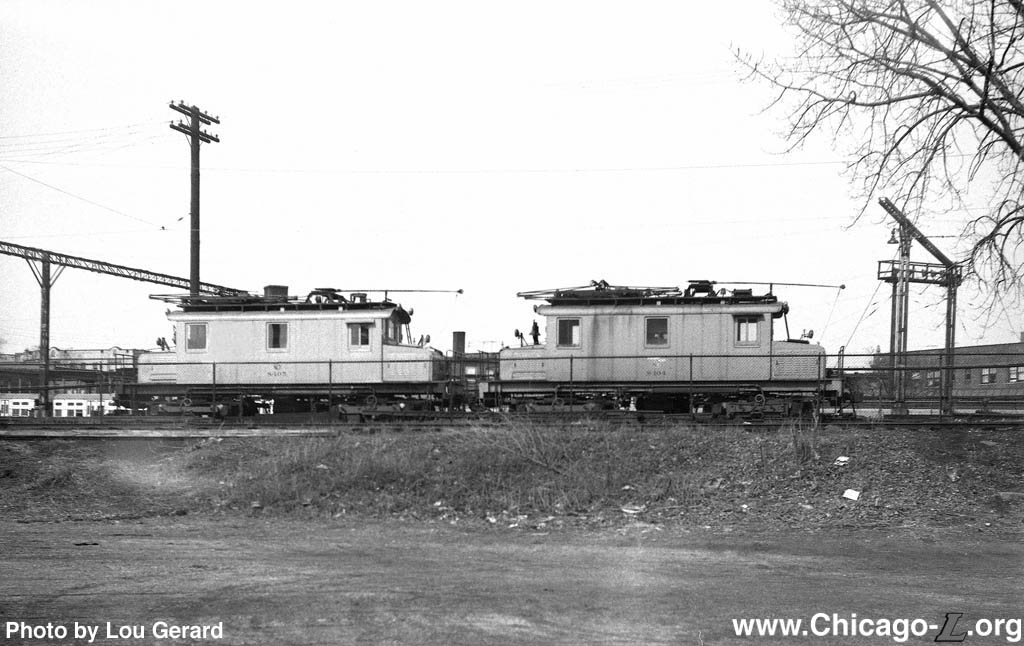
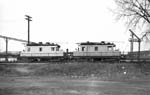
Locomotives S-104 (right) and S-105 are parked in their usual storage spot during the later years of their service lives, on the inclined spur track leading to Hines Lumber along the west property line of Howard Yard. The two Westinghouse locomotives are seen in profile parked on the spur in March 1964. (Photo by Lou Gerard) |
|
howard05.jpg (126k)
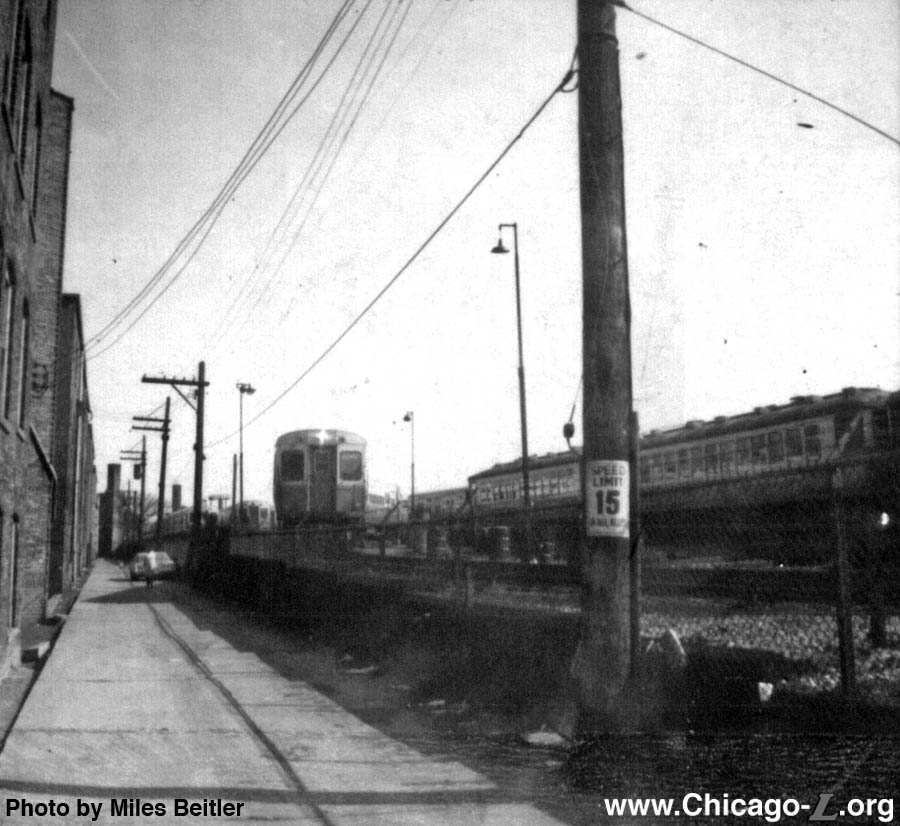
The east side of Howard Yard is seen looking southeast from
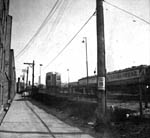
Juneway Terrance in 1965. Parked in the yard are several 4000-series cars, with a 6000-series car on the turning loop/yard lead. With the expansion of
Howard Yard in the early 1990s, the apartments on the left
side of the alley are now gone and this view would be
looking directly at the Howard Shops
building. (Photo by Miles
Beitler) |
|
ctaS-105.jpg (160k)
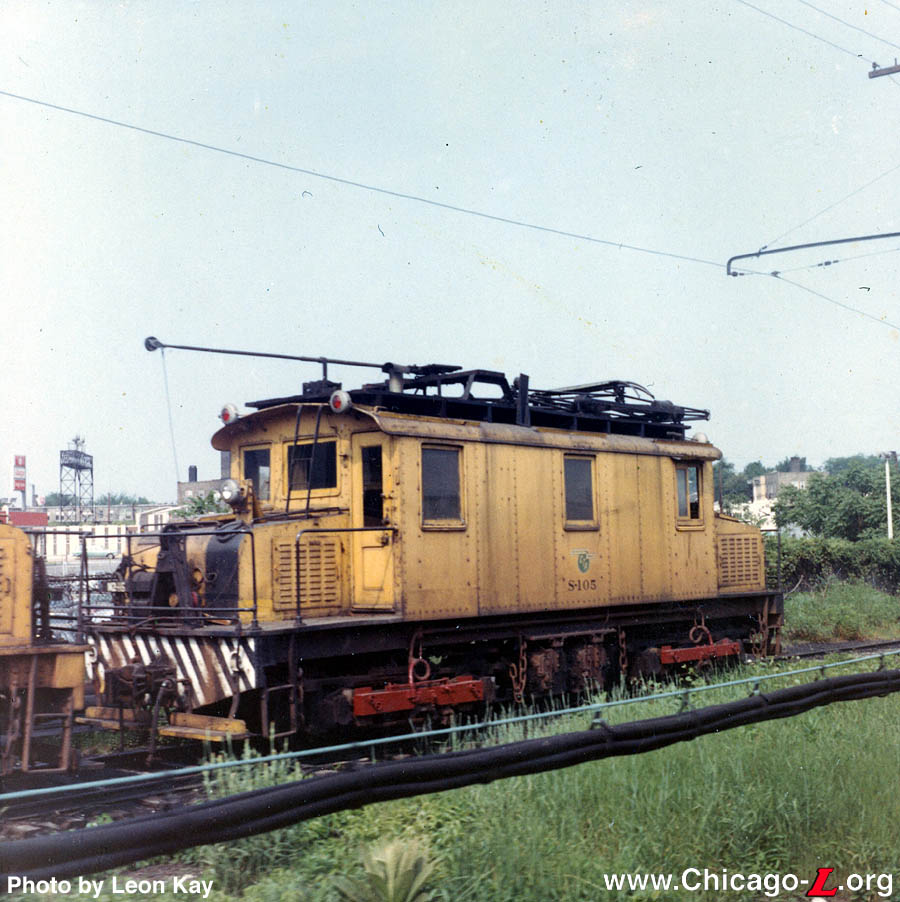
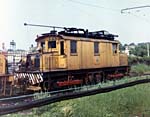
S-105, one of CTA's two is of Baldwin-Westinghouse freight motors, is in its
pocket track at Howard Yard in
June 1968, where it and sister S-104 generally rested during
the day. Most freight runs were done at night and during
off-peak times when they would not interrupt passenger
traffic. Thus, the locomotives had a lot of down time. By
this point, the unit has been retrofit with sealed-beam
headlights and marker lights. (Photo by Leon
Kay) |
|
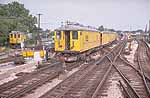
ctaS-353b.jpg (160k)
S-353, with its sleet-scrapper trolley pole and snow plow,
is in Howard Yard on August 7, 1974, several months away
from winter snow service. Line car S-606, originally a North
Shore Line car, is also in the yard, on the left. (Photo by Doug Grotjahn, Collection of Joe
Testagrose) |
|
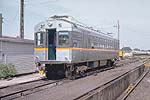
cta24a.jpg (123k)
Car 24, in its distinctive silver, charcoal, and orange
paint scheme, sits in the Howard Yard between assignments on
August 7, 1974. (Photo by Doug Grotjahn,
Collection of Joe Testagrose) |
|
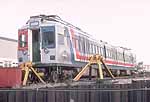
cta54.jpg (101k)
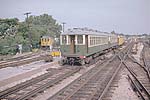
Between runs, car 54 - the John Paul Jones - sits in the
Howard Street Yard on September 22, 1976. (Photo by Doug Grotjahn, Collection of Joe
Testagrose) |
|
cta4325.jpg (140k)
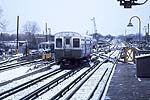
Out of revenue service for about a year, car 4325 leads a
work train -- including fully converted, yellow-painted 4000-series work
cars -- through Howard Yard on August 7, 1974. Note the
other work car on the left in the yard. (Photo by Doug Grotjahn, Collection of Joe
Testagrose) |
|
cta6777.jpg (106k)
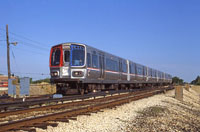
Car 6777 (originally numbered 6339) is in service at Howard on January
31, 1986. The car has just swung around the outside of the
yard to turn around and is heading southbound into the
station. (Photo by Peter Vesic) |
 |
cta2163.jpg (222k)
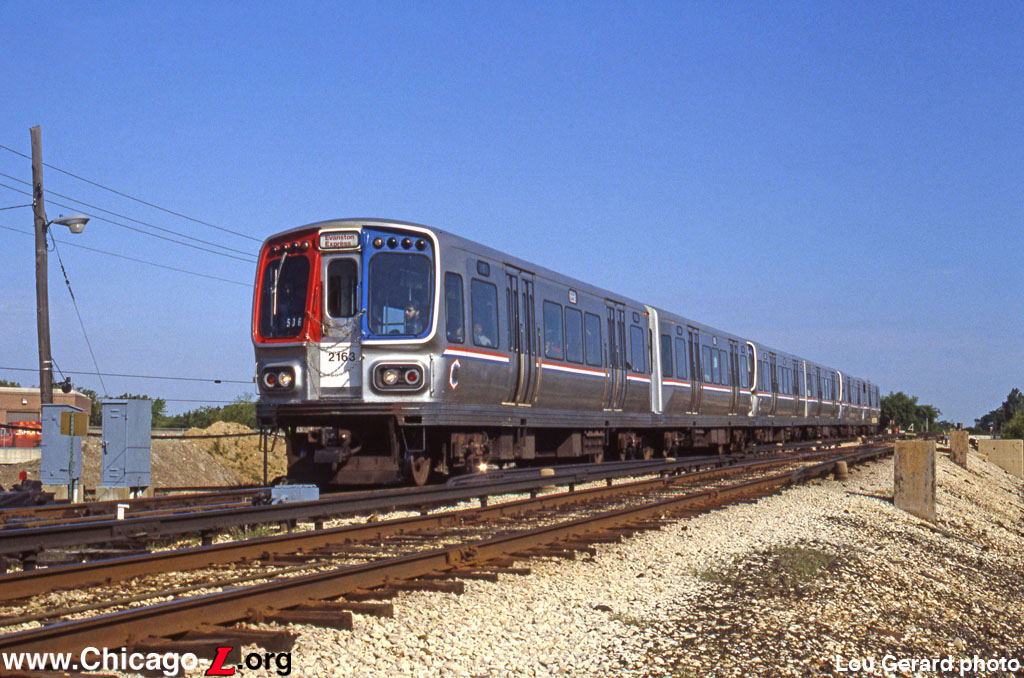
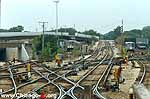
Car 2163 leads a 6-car southbound Evanston Express train of all Spirit of Chicago-painted 2000-series cars, momentarily stopped on the incline down from the Chicago Avenue bridge on the Evanston branch coming into Howard, in 1986. (Photo by Lou Gerard) |
|
cta2000s@HowardYard.jpg (46k)
A train of North-South 2000s is completing a trip around the turnaround loop in Howard
Yard to begin another southbound journey while another set
of 2000s is
parked on a storage track at right in July 1988. The yard is
under reconstruction: the tracks straight ahead that lead to
the Evanston Line will soon be superseded by the new flyover
being constructed at left. (Photo by James
Raymond) |
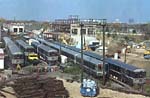
|
howard03.jpg
(91k)
Several different types of cars --
6000-, 2000-,
and 2600-series
cars -- are all being stored at Howard Yard while
reconstruction continues on October 23, 1991. A new shop
building is being built in the center of the
photo. (Photo by Art Peterson)
|
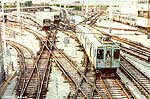
|
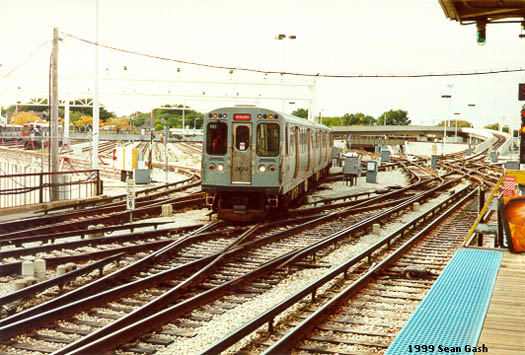
cta3200s@howard.jpg
(86k)
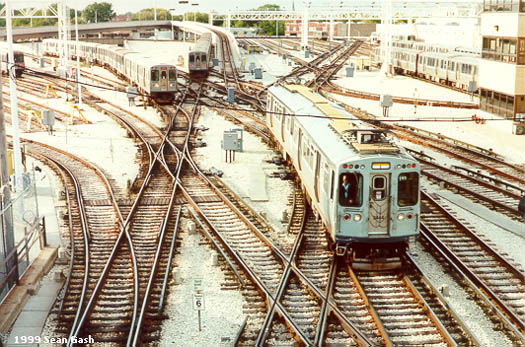
Looking north from the Howard
station overhead transfer bridge on October 7, 1999, we can
two sets of the 2600s
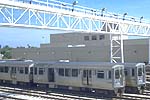
in the background, a Yellow Line 3200
coming into the station, and Howard Yard as the backdrop to
it all. The Howard Shops can be seen on the right.
(Photo by Sean Gash)
|
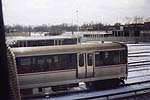
|
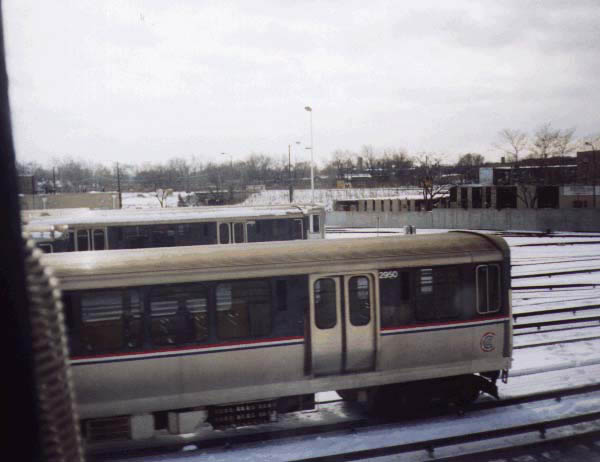
cta2950.jpg
(43k)
Looking southwest into Howard Yard from the elevated
Evanston tracks, we seeing two 2600-series
cars in their original Spirit of Chicago livery - with car
2950 in the foreground - parked between assignments on
February 19, 2000.
(Photo by Jack S. and Chris
L.)
|
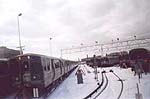
|
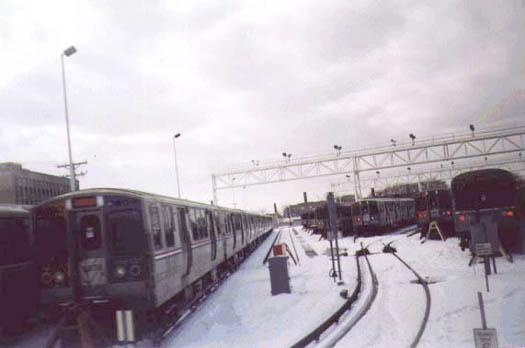
cta2578.jpg
(31k)
Looking west into the Howard Yard on Saturday, February 19,
2000, we see all cars laid over for the weekend, awaiting
the increased demand the Monday rush hour will bring. Car
2578 is in the left foreground, with a number of 2400s
and 2600s on the
storage tracks to the right. (Photo by Jack
S. and Chris L.)
|
|
CERA2000a.jpg
(65k)
The Central Electric
Railfan Association's 2000 CTA charter train -- comprised of cars
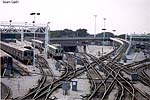
3443-3444/S-601/3441-3442 -- heads south through Howard Yard
from the Purple Line toward Howard
station on September 3, 2000. (Photo by Sean
Gash)
|
|
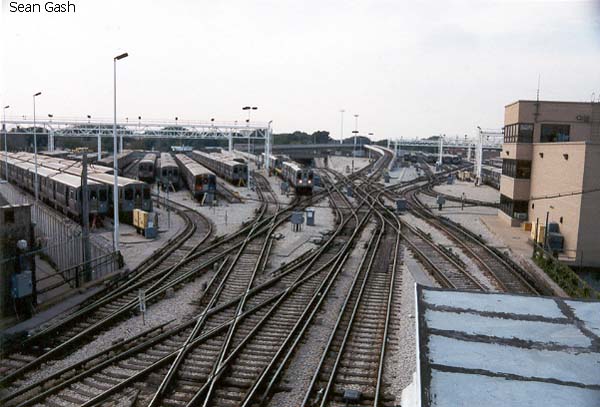
CERA2000b.jpg
(58k)
Similar view of the CERA
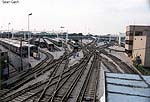
charter as above, with a larger, fuller view of Howard Yard
on September 3, 2000. (Photo by Sean
Gash)
|
|
IRMtrip@Howard.jpg
(90k)
The IRM PCC charter train
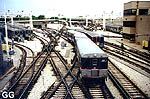
-- cars 22 and 6655-6656 -- works its way through Howard
Yard, and past a northbound Purple Line Shuttle, into
Howard station to
pick up the charter riders on May 6, 2001.
(Photo by Graham Garfield)
|
|
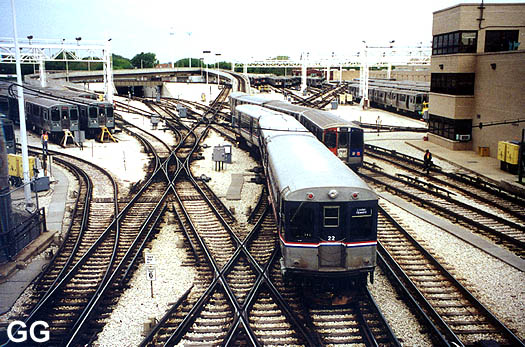
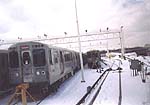
cta22h.jpg
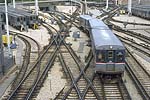
Car 22 leads a IRM
charter train as it snakes its way through Howard
Yard, looking north on the overhead transfer bridge on
May 6, 2001. (Photo by Mike
Farrell)
|
|
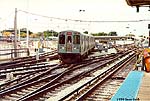
cta2752.jpg
Rehabbed 2600-series
car 2752 sits in the Howard Yard between runs on February
19, 2000. A 2400-series
work motor can be seen in the background on the right.
(Photo by Jack S. and Chris L.)
|
|
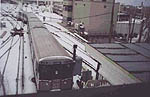
cta2630.jpg
Rehabbed 2600-series
car 2630 is leading this train, coming southbound off the
turning loop at Howard
Street into the station, on October 7, 1999. The yard is
seen in the background. (Photo by Sean
Gash)
|
|
cta2848b.jpg
Looking north from the Howard
station overhead transfer bridge, was see car 2848 bringing
up the tail of a four-car Evanston shuttle train bound for
Linden on February
19, 2000. Howard Yard is in the background; Howard Shops are
on the right. (Photo by Jack S. and Chris
L.)
|
|
|
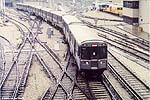
cta2950.jpg
Looking southwest into Howard Yard from the
elevated Evanston tracks, we seeing two 2600-series
cars in their original Spirit of Chicago livery - with car
2950 in the foreground - parked between assignments on
February 19, 2000. (Photo by Jack S. and
Chris L.)
|
|
cta3028.jpg
(277k)
A 2600-series
car (probably 3028) leads an 8-car Red Line train through
Howard Yard circa May 1999. (Photo by Sean
Gash)
|
|
cta2611.jpg
(83k)
Car 2611 joins several of its rehabbed 2600-series
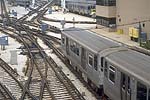
brethren in Howard Yard between assignments on July 16,
2000. The view looks northeast toward the shops.
(Photo by Mike Farrell)
|
|
cta2745.jpg
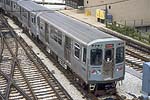
A Red Line train led by car 2745 heads into
Howard Yard, looking north from the overhead transfer bridge
at Howard station
on August 22, 2001. (Photo by Mike
Farrell)
|
|
cta2761.jpg
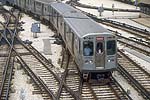
After unloading its passengers at Howard
station, a Red Line train trailed by car 2761 heads into
Howard Yard to the turnback loop, to head back into the
station for a new run south to 95th,
looking north on August 22, 2001. (Photo by
Mike Farrell)
|
|
cta2782b.jpg
After going through the turnback loop in Howard
Yard, car 2782 leads a Red Line train heading into Howard
station to pick up passengers from the trip south on August
22, 2001. The operator has not yet changed the destination
signs to read "95/Dan
Ryan". (Photo by Mike
Farrell)
|
|
cta3200sYard02.jpg
(77k)
A Skokie Swift 3200-series
train sets off for Dempster
Street through Howard Yard, looking north on April 10,
1998. (Photo by Sean Gash)
|
|
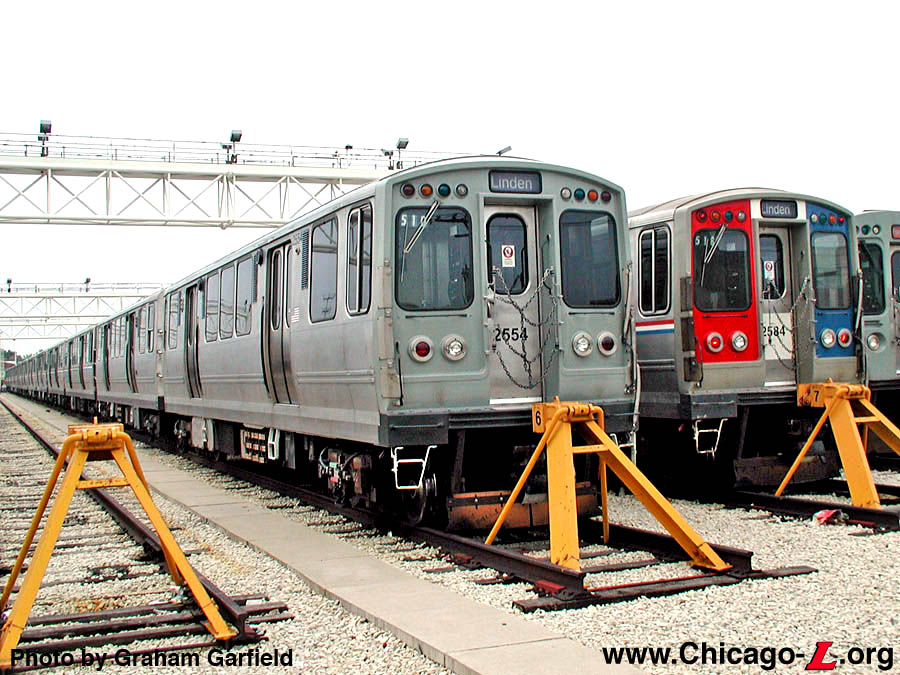
cta2554_2584.jpg
(182k)
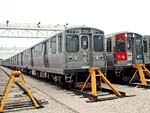
Stored midday in Howard Yard when fewer cars are needed in
Purple Line service, cars
2554 and 2584 display the two different 2400-series
liveries seen on the system in 2005 side-by-side on August 4
of that year. As the 2400s
are cycled through the shops for overhauls, they are
stripped of their red, white, and blue belt rails and their
end caps painted gray, making them more visually compatible
with the rest of the gray/silver unpainted fleet. During the
transition, 2400-series
cars both colorful and plain could be seen on the system.
(Photo by Graham Garfield)
|
|
ROW@HowardYardLoop.jpg
(223k)
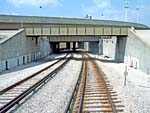
Before reaching its own right-of-way, the Skokie Swift first
negotiates through Howard Yard on its way west. Descending
below grade, level with its alignment through most of
Evanston in open cut, the Yellow Line tracks travel below
the Howard Yard loop track, used to turn Red Line trains,
then the inbound Purple Line viaduct, and finally Chicago
Avenue, seen in that order looking west on April 12, 2006.
(Photo by William Davidson)
|
|

|
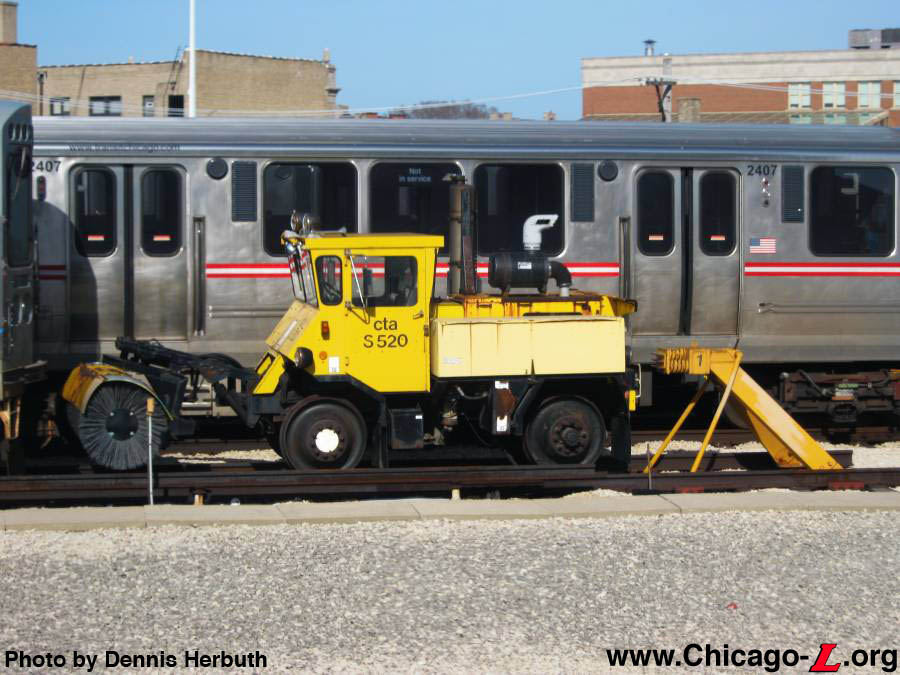
ctaS-520.jpg (141k)
Snowbroom S-520 is sitting in Howard Yard, at the far south end of Track 1S, on March 28, 2010. Built by Marmon Transmotive in 1982, the S-520 is one of several small Marmon snowbrooms CTA owns, but all are now in poor condition and are rarely, if ever, used. (Photo by Dennis Herbuth) |
 |
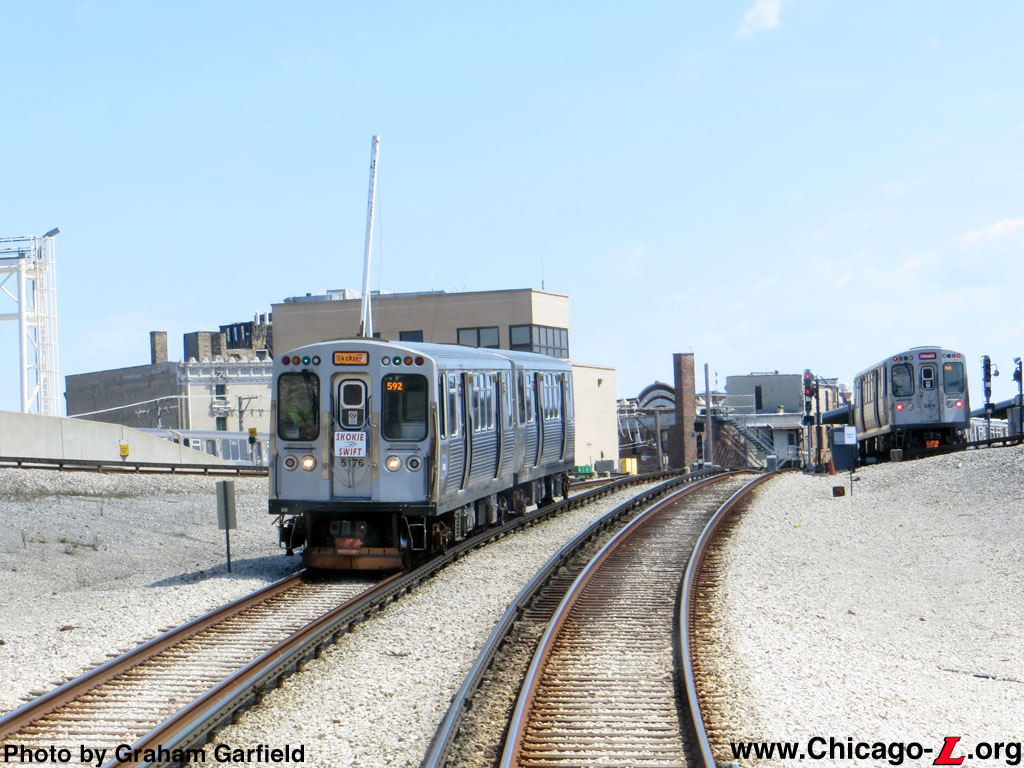
cta5176b.jpg (217k)
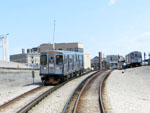
Having departed Howard station and passed through the interlocking at the entrance to Howard Yard, car 5176 leads a Yellow Line train coming down the hill to pass under the yard's loop track, Chicago Avenue and the Metra Union Pacific tracks before entering the open cut right-of-0way on its way to Dempster on April 26, 2014. A Red Line train is visible at the top of the hill, having just turned around, coming off the loop track. The Yellow Line train is sporting a classic Skokie Swift sign for the line's 50th anniversary. (Photo by Graham Garfield) |
 |
cta5696-Cubs01.jpg (216k)
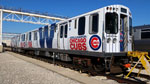
The first two of the four cars CTA wrapped to celebrate the Cubs' World Series victory, 5695-5696, sit in Howard Yard on November 7, 2016, shortly before going into service later that day; car 5696 is nearest to the camera. The large "W" on the side mimics the "win" flag that is flown on the stadium scoreboard when the Cubs win, a tradition that began as a way to let "L" riders passing Wrigley Field know who won that day's game. (Photo courtesy of the CTA) |
 |
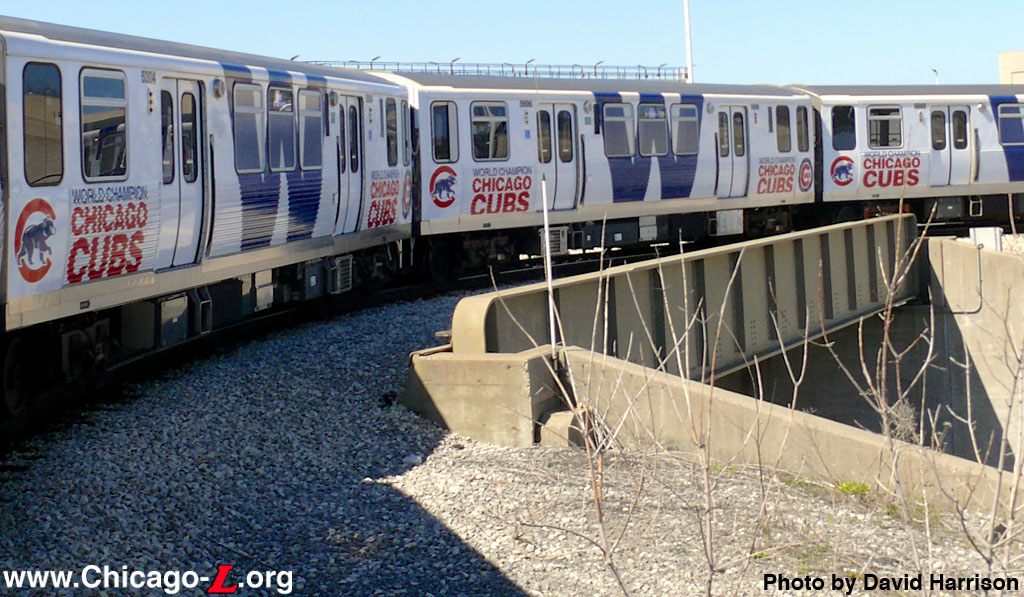
cta5304_5696-95-Cubs.jpg (217k)
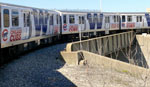
Going around the inner turning loop track in Howard Yard provides a good side view of the Cubs-wrapped cars, and strong impression of how a train of all Cubs cars in a row looks, as cars (l to r) 5304, 5696 and 5695 wind their way through on a charter on April 23, 2017. (Photo by David Harrison) |