|
|



|
|
|

2200-series Cars
|
|
|
|
|
2200-series Cars
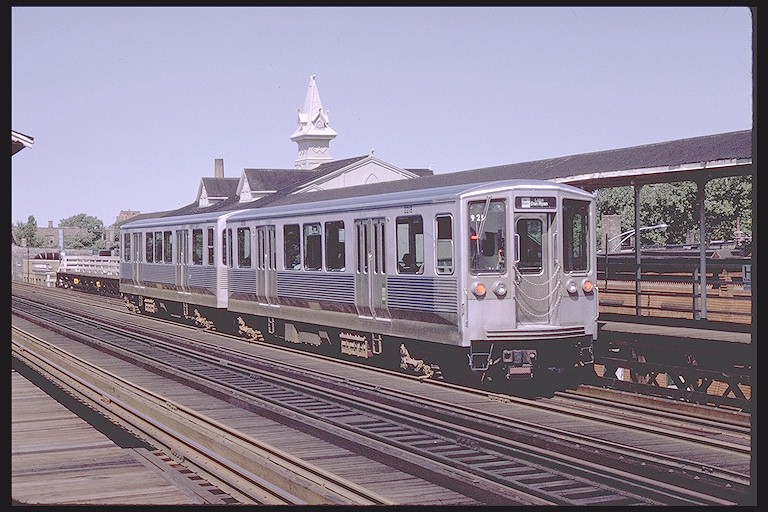
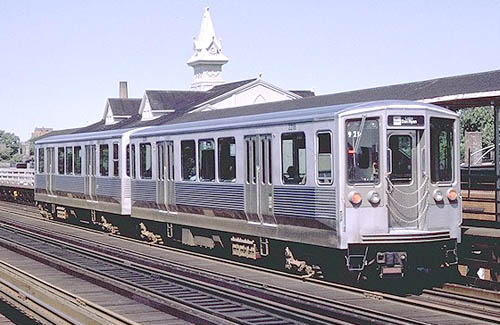 Car 2218 trails a two-car West-South Route train at Homan on August 16, 1970, a year after delivery. For a larger view, click here. (Photo by Joe Testagrose) |
Specifications:
Built by: Budd Company
Year: 1969-70
Length: 48'-0"
Width at Floor: 8'-8"
Width at Windows: 9'-4"
Height over Roof: 12'-0"
Trucks: Budd Pioneer III
Truck centers: 33'-8"
Truck wheelbase: 78"
Coupler: #1 end / #2 end: Form 5 / tubular
Wheel diameter: 28"
|
Seats:. |
A-47 B-51 (as-built) |
|
A-42 B-46 (after mid-life rehab) * |
* Rebuilt by New York Rail Car in 1990-1992
+ The propulsion package, while capable of higher speeds, is limited by the logic of the car controls and the external signal system.
History:
In March 1967, the City of Chicago started construction on two rapid transit extensions. One was in the median of the Dan Ryan Expressway from 18th Street to 95th Street and the other from Logan Square via the Kennedy Expressway median to Jefferson Park. The construction projects included 150 cars of the 2200-series designed and built by the Budd Company and funded by the Department of Housing and Urban Development and the City of Chicago.
The City of Chicago was technically the grantee and, therefore, purchased the cars. The City hired consultants, including CTA , who provided engineering assistance to prepare the car specifications and Skidmore, Owings and Merrill, who prepared the aesthetic details of the cars to harmonize with their modernist stations on the Dan Ryan and Kennedy extensions.
Planned as another generation in the High Performance Family started by the 2000-series cars, the 150 cars of the 2200-series were thus designed to be totally compatible with the earlier 2000-series cars. Though the cars were required to have a top speed capability of 70 mph, they were limited in operation to 55 mph, matching that of the 2000-series cars.
The aesthetic features of the 2200-series cars included large windows, charcoal gray seat coverings, beige window masks and gray wainscot panels, loop handles on the seats, and horizontal fluted stainless steel exterior sides. The air conditioning package was entirely under the car and used a system of ducts to distribute air more uniformly throughout the car. A motorman's cab that opened up for passenger use when not in service and a plain front end with only inserts of fiberglass for the windows and lights were additional innovations. Most striking on the exterior was the use of unpainted stainless steel instead of the painted aluminum that had been standard in Chicago designs for twenty years; this would not be repeated until the 3200-series cars nearly 25 years later. These were the last and are the only cars remaining with "blinker" doors, which turn inward as they open.
When compared with the 2000-series cars, the engineering differences in the car and electrical systems were insignificant. The trucks, however, were of a new type, the Budd Pioneer III. These cars have proven to be reliable performers, aggregating more average annual mileage than the 2000-series cars did in their first years.
Rehabs and Overhauls
The cars received their mid-life rehab in 1990-92, overhauled by the New York Rail Car Corporation, though the changes to the cars were not obvious nor monumental. The windows were retrofit with hopper windows along the top, which could open in case of air conditioning failure. The provision of hopper windows also was not repeated until the 3200s, though they were later installed in the retrofit 2600-series cars and were included in the later 5000-series cars. The 2200s' cabs were also remodeled and were changed to be only for crew use. Padded seats were replaced by fiberglass seat frames and inserts. Backlit advertising card racks were replaced with unlit solid panels, except for the ones in the bulkheads over the sidedoors. The loss of these lights were offset by the installation of ceiling-mounted fluorescent tubes just above the ad racks. Interior panels were also retrofit to match the appearance of more recent rail cars, such as the use of faux-wood grain panels on some wall surfaces and stainless steel door surrounds. Outside, external speakers were installed next to the sidedoors.
The CTA's 2002-2006 Capital Improvement Plan included the retirement and replacement of the 2200-series cars. The 2200-series railcars had been in service for over 30 years at that point, which was well beyond their 25 year design life. The condition of these vehicles was evidenced in the form of increased service failures and longer repair downtime, which resulted in decreased availability for service. The CTA received Illinois FIRST program funds to by up to 150 new rail cars, which would be sufficient to replace the 2200s. However, this did not provide for an increase in the CTA's fleet size which was required when the Brown Line's capacity was expanded to include 8-car trains in 2009, so the life of the 2200-series cars needed to be extended until additional funds could be identified to cover both replacement and fleet expansion. The 2003-2007 Capital Improvement Plan included FY 2003-2007 funding for the replacement of the 2200-series rail cars. However, when the new car procurement was delayed due to the decision to return to the drawing board and give the new cars AC propulsion (what would eventually become the 5000-series cars), the 2200s got a reprieve. As a result of a revised schedule for replacement, the 2200-series rail cars received more heavy overhaul work so that the service life of these cars was extended for a period of five to nine years. Examples of items that were replaced are control groups, air conditioning units, and truck assemblies including traction motors, brake calipers, and axle assemblies.
Beginning in spring 2004, the CTA began to overhaul the 2200-series rail cars as part of a life-extending rehabilitation. The need to overhaul these cars and keep them in active service is brought on, in part, by not being able to take delivery of new cars until 2006 at the earliest. (In fact, the prototype 5000-series cars did not arrive until 2009, and the production cars did not go into service until 2011.) The overhaul included rebuilding of all 2200-series cars' trucks and control groups. The trucks received new wheels, rebuilt traction motors, rebuilt gearboxes and new cabling. A rebuilt truck provides passengers with a smoother and more reliable ride. Other work included the upgrade and repair of electric couplers, doors and batteries.
Service History
The 2200-series cars are somewhat unique in that, unlike the railcars of most other series that have moved around to various line over the course of their service lives, the 2200s have only been assigned to a few routes during their 40-plus year careers. Furthermore, some cars have spent their entire service life on a single route, a very unusual situation for "L" cars.
The cars were purchased to provide service on the Dan Ryan Line and the Kennedy Extension when those system expansions opened, and so were assigned to those lines and the lines they were through-routed with -- the West-South Route (Lake-Dan Ryan) and West-Northwest Route (Milwaukee-Congress-Douglas), respectively. On the Lake-Dan Ryan, they were commonly run in mixed consists with the 2000-series cars (they were designed to be compatible, both part of the High-Performance Family of cars); the 2000s were repainted in a paint scheme conceived of by Sundberg-Ferar, with the body and roof painted platinum silver and a charcoal black band through the windows to de-emphasize the two series' different window heights to make the cars harmonize visually. On the West-Northwest Route, the 2200s were operated in solid trains, as the other cars assigned to the route -- the PCC 6000-series cars -- were not compatible.
The cars remained split between the West-South Route and West-Northwest routes for about 13 years. The exact split between the lines fluctuated over the years, but generally speaking about two-thirds were assigned to the West-Northwest Route (typically around 80-96 cars), and the remaining third were on the West-South during the early 1970s. One exception was during the winter of 1972-73, when all of the cars were moved to the West-South Route to receive modification work; an equal number of 2000-series cars were temporarily moved to the West-Northwest Route for the winter to make up the difference. Starting in the mid-1970s the split became more even, and by 1980 the balance had flipped in the other direction -- 104 were assigned to the West-South and the remainder were on the West-Northwest, their place having been taken by 70 of the then-new 2400-series cars.
In the early 1980s, with the continuing retirement of the older 6000-series cars and the arrival of the new 2600-series cars, CTA began shifting the car assignments. The 2400s were taken off the West-Northwest Route, with most going to the West-South. The 2200s were sent back to the West-Northwest, along with some of the new 2600s. By the summer of 1983, all of the 2200-series cars (which totalled 144 cars at that point, some already having been retired due to damage from accidents) were assigned to the West-Northwest Route. Throughout 13 years of shifting the cars between the two routes, several cars numbered in the 2300s remained on the West-Northwest Route, and would remain on that route (or its later incarnations) their entire lives.
By the summer of 1987, the last of the 6000-series cars were removed from the West-Northwest Route, leaving just 2200s and 2600s on the line. The 2200s and 2600s would frequently operate in mixed consists on the route, which was renamed the Blue Line in 1993. With the exception of a period of 1993-96 when a few 5-50 series cars were assigned to the Blue Line (but which were there largely for work train service and saw limited passenger service), this would remain the cars' service environment for the remainder of their lives.
Following the passage of the Americans with Disabilities Act (ADA), the 2200-series cars were required to be paired with at least one 2600-series car in each train to maintain accessibility on every train, since the 2200-series cars' folding blinker doors could not accommodate a wheelchair, nor was there a space inside a 2200-series car for a wheelchair to be safely positioned out of the aisle or doorway. CTA's preference was to "belly" the 2200s -- to have them in the middle of the consists rather than on the ends -- though various factors did not always allow this to be the case.
In 2006, the Douglas branch (by then called Cermak branch) of the Blue Line was split off and operated as its own route to the Loop, the Pink Line. Some rush period Blue Line service over the Cermak branch was maintained through 2008. Of the 44 cars required for Pink Line service, half assigned were the first 2200-series cars, cars 2201-2222. Practically speaking, some of these 2200s still travelled to the O'Hare branch on the rush hour O'Hare-54th trips, and some 2200s assigned to the Blue Line did the opposite, travelling to the Cermak branch during rush. After the rush period O'Hare-54th trips were discontinued in 2008, all of the 2200s were again assigned to the Blue Line, where they remained until retirement.
Retirement
The 2200s were the oldest cars in "L" service for a long time, from 1998 (when the last of the 5-50 and 61-50 series cars made a few revenue runs on the Yellow Line) to 2013. Reaching 44 years of service before the series' retirement began, the 2200-series is first series of cars that were used in daily service that are over 40 years old since the 4000-series cars on the Lake Street Line. (While the 4000s continued to be used for several more years, with some cars eventually reaching 49 years of service, their use was limited to rush hour service in their final years.)
While some 2200-series cars were retired as early as the 1970s, just a few years into their service lives, due to accidents or other mishaps, 144 of the 150 cars built remained in service into the 21st century. Retirement of the cars did not begin in earnest until 2010.
In October 2010, four 2200-series cars -- 2291-2292 and 2329-2330 -- were moved from the active roster to the long-term hold list to provide a pool of parts for the rest of the 2200-series fleet. By June 2011, the four cars were off the car roster entirely, and were scrapped in 2012.
With the delivery of production units of the new 5000-series cars beginning in 2011, and accelerating in 2012, the remaining 2200-series cars began to be retired and scrapped. Belson Steel Center Scrap, Inc. of Bourbonnais, Illinois won the contract to scrap the first set of cars that were retired in 2012. The units were taken to Chicago Heights Processing, which is owned by Belson, for scrapping to be performed. In addition, three cars were sold to the US government for training purposes and sent to Fort McCoy, Wisconsin.
Last trip of 2200-series in scheduled revenue service was Wednesday morning, July 31, 2013. Last trip that included 2200s was Blue Line Run 104, which arrived at O'Hare at 1018 hours with a consist of cars 2693-2694-2345-2346-2340-2339-3161-3162. Following its arrival at O'Hare, the train was laid up at Rosemont Yard, with the 2200s thereafter out of daily service.
To commemorate the millions of rides provided for more than four decades by the 2200-series railcars, on August 8, 2013 the CTA held ceremonial last rides on the cars for the public and media. For the event, a solid 8-car train of 2200-series cars made two trips on the Blue Line -- one short non-stop trip from Rosemont to Jefferson Park and back for media and the public departing Rosemont at 10:05am; and a round-trip between O'Hare and Forest Park, making all local stops, departing O'Hare at 11:05am and Forest Park at 12:50pm.
The eight cars used in the train had their modern exterior decals removed and reproduction "Air conditioned" and ACI stripe decals from their early years installed. Congress-Milwaukee "A" train destination signs were utilized by placing decals of the roller curtain graphics on the sign glass. Inside, reproduction car cards from the cars' first decade in service were installed, along with West-Northwest Route and system map car cards over the doors. The consist of the train was, in order, 2250-2249-2340-2339-2223-2224-2327-2328 -- car 2328 was the head car on the trip that departed O'Hare and 2250 was the head car on the final trip the departed Forest Park.
Two of the cars, 2243-2244, were purchased by and preserved at the Illinois Railway Museum. Two other cars. 2347-2348, were sold by CTA at an online auction through Rick Levin & Associates, Inc. Auctions on December 18, 2013. One of those cars was purchased by Jungle Jim's International Market, a large supermarket resembling a theme park with two locations in Ohio; the car was delivered the first week of February 2014 and installed at the store's Fairfield, OH location. At the time of delivery, the store planned to use it as a cigar shop; this, however never came to pass and the car was resold to Google.
In-Service, Rehab and Disposition Dates
When the 2200s were retired en masse, the cars were scrapped by Belson Steel Center Scrap, Inc. at their Chicago Heights Processing facility. Some cars that were retired earlier were scrapped by Pielet Bros. of Summit, IL.
Notes on the chart below: "Date Delivered" is the first working day when the car was at Skokie Shops, having arrived via flat car. "Date Accepted" is when all departments at Skokie Shops had completed the new-car inspection. Payment to Budd was based on this date. "Date to NYRC" was the day the car left CTA to go to New York Rail Car Corporation in Brooklyn, NY for mid-life rehab. "Date from NYRC" includes two dates: "Arr" is the day the car arrived back at CTA from New York Rail Car, and "Acpt" is Skokie Shops had completed inspection of the car and accepted it. And "Date Left CTA" was the date the car was removed from CTA property, whether bound to a scrapper, museum or elsewhere. The in-service and rehab date information in this chart was provided by Fred Lonnes.
| Car | Date Delivered | Date Accepted | Date to NYRC | Date from NYRC | Date to LTH | Date Left CTA | Notes |
| 2201 | 6/21/1969 | 9/17/1969 | 5/15/1989 | Arr: 1/16/1991 Acpt: 1/31/1991 |
by 12/12/2011 | 8/14/2012 | Scrapped by Belson Steel Center Scrap |
| 2202 | 6/21/1969 | 9/17/1969 | 5/19/1989 | Arr: 1/16/1991 Acpt: 1/31/1991 |
by 12/12/2011 | 8/13/2012 | Scrapped by Belson Steel Center Scrap |
| 2203 | 6/25/1969 | 9/17/1969 | 9/18/1989 | Arr: 2/21/1991 Acpt: 3/8/1991 |
by 2/7/2013 | 3/13/2013 | Scrapped by Belson Steel Center Scrap |
| 2204 | 6/25/1969 | 9/17/1969 | 9/27/1989 | Arr: 2/13/1991 Acpt: 3/8/1991 |
by 2/7/2013 | 3/14/2013 | Scrapped by Belson Steel Center Scrap |
| 2205 | 9/3/1969 | 9/21/1969 | 5/31/1991 | Arr: 8/16/1991 Acpt: 9/4/1991 |
by 8/19/2011 | 6/29/2012 | Scrapped by Belson Steel Center Scrap |
| 2206 | 9/3/1969 | 9/21/1969 | 5/31/1991 | Arr: 8/16/1991 Acpt: 9/4/1991 |
by 8/19/2011 | 7/2/2012 | Scrapped by Belson Steel Center Scrap |
| 2207 | 9/10/1969 | 9/24/1969 | 10/15/1991 | Arr: 12/19/1991 Acpt: 1/14/1992 |
by 5/26/2012 | 8/1/2012 | Scrapped by Belson Steel Center Scrap |
| 2208 | 9/10/1969 | 9/24/1969 | 10/15/1991 | Arr: 12/19/1991 Acpt: 1/14/1992 |
by 5/26/2012 | 8/3/2012 | Scrapped by Belson Steel Center Scrap |
| 2209 | 9/19/1969 | 9/25/1969 | 9/10/1991 | Arr: 11/20/1991 Acpt: 12/9/1991 |
by 7/15/2013 | 3/24/2014 | Scrapped by Belson Steel Center Scrap |
| 2210 | 9/19/1969 | 9/25/1969 | 9/10/1991 | Arr: 11/20/1991 Acpt: 12/9/1991 |
by 7/15/2013 | 3/25/2014 | Scrapped by Belson Steel Center Scrap |
| 2211 | 9/15/1969 | 9/25/1969 | 2/8/1990 | Arr: 3/5/1991 Acpt: 3/15/1991 |
by 6/5/2013 | 8/9/2013 | Scrapped by Belson Steel Center Scrap |
| 2212 | 9/15/1969 | 9/25/1969 | 2/1/1990 | Arr: 3/5/1991 Acpt: 3/15/1991 |
by 6/5/2013 | 8/8/2013 | Scrapped by Belson Steel Center Scrap |
| 2213 | 9/22/1969 | 9/26/1969 | 3/14/1991 | Arr: 7/9/1991 Acpt: 7/19/1991 |
by 8/19/2012 | 2/8/2013 | Scrapped by Belson Steel Center Scrap |
| 2214 | 9/22/1969 | 6/26/1969 | 3/14/1991 | Arr: 7/9/1991 Acpt: 7/19/1991 |
by 8/19/2012 | 2/11/2013 | Scrapped by Belson Steel Center Scrap |
| 2215 | 9/24/1969 | 9/28/1969 | 4/16/1991 | Arr: 7/23/1991 Acpt: 7/31/1991 |
by 5/26/2012 | 3/21/2013 | Scrapped by Belson Steel Center Scrap |
| 2216 | 9/24/1969 | 9/28/1969 | 4/16/1991 | Arr: 7/23/1991 Acpt: 7/31/1991 |
by 5/26/2012 | 3/22/2013 | Scrapped by Belson Steel Center Scrap |
| 2217 | 9/26/1969 | 9/29/1969 | 5/7/1991 | Arr: 7/31/1991 Acpt: 8/16/1991 |
by 6/5/2013 | 7/19/2013 | Scrapped by Belson Steel Center Scrap |
| 2218 | 9/26/1969 | 9/29/1969 | 5/7/1991 | Arr: 7/31/1991 Acpt: 8/16/1991 |
by 6/5/2013 | 7/22/2013 | Scrapped by Belson Steel Center Scrap |
| 2219 | 9/28/1969 | 9/29/1969 | 7/31/1991 | Arr: 10/22/1991 Acpt: 11/15/1991 |
by 7/15/2013 | 11/8/2013 | Scrapped by Belson Steel Center Scrap |
| 2220 | 9/28/1969 | 9/29/1969 | 7/31/1991 | Arr: 10/22/1991 Acpt: 11/15/1991 |
by 7/15/2013 | 11/7/2013 | Scrapped by Belson Steel Center Scrap |
| 2221 | 9/28/1969 | 10/16/1969 | 11/15/1991 | Arr: 1/28/1992 Acpt: 2/10/1992 |
by 6/5/2013 | 7/24/2013 | Scrapped by Belson Steel Center Scrap |
| 2222 | 9/28/1969 | 10/16/1969 | 11/15/1991 | Arr: 1/28/1992 Acpt: 2/10/1992 |
by 6/5/2013 | 7/23/2013 | Scrapped by Belson Steel Center Scrap |
| 2223 | 9/28/1969 | 10/9/1969 | 1/22/1992 | Arr: 4/1/1992 Acpt: 4/10/1992 |
by 9/5/2013 | 12/9/2013 | Scrapped by Belson Steel Center Scrap |
| 2224 | 9/28/1969 | 10/9/1969 | 1/22/1992 | Arr: 4/1/1992 Acpt: 4/10/1992 |
by 9/5/2013 | 12/6/2013 | Scrapped by Belson Steel Center Scrap |
| 2225 | 9/22/1969 | 12/11/1969 | 9/23/1991 | Arr: 12/2/1991 Acpt: 12/13/1991 |
? | 3/19/2013 | Scrapped by Belson Steel Center Scrap |
| 2226 | 9/22/1969 | 12/11/1969 | 9/23/1991 | Arr: 12/2/1991 Acpt: 12/13/1991 |
? | 3/20/2013 | Scrapped by Belson Steel Center Scrap |
| 2227 | 9/24/1969 | 10/17/1969 | 9/17/1991 | Arr: 3/5/1992 Acpt: 3/19/1992 |
by 6/5/2013 | 8/12/2013 | Scrapped by Belson Steel Center Scrap |
| 2228 | 9/24/1969 | 10/17/1969 | 9/17/1991 | Arr: 3/5/1992 Acpt: 3/19/1992 |
by 6/5/2013 | 8/13/2013 | Scrapped by Belson Steel Center Scrap |
| 2229 | 9/26/1969 | 10/10/1969 | 1/28/1992 | Arr: 4/6/1992 Acpt: 4/20/1992 |
by 7/15/2013 | 11/5/2013 | Scrapped by Belson Steel Center Scrap |
| 2230 | 9/26/1969 | 10/10/1969 | 1/28/1992 | Arr: 4/6/1992 Acpt: 4/20/1992 |
by 7/15/2013 | 11/6/2013 | Scrapped by Belson Steel Center Scrap |
| 2231 | 12/8/1969 | 12/15/1969 | 12/19/1991 | Arr: 2/28/1992 Acpt: 3/10/1992 |
by 12/12/2011 | 2/1/2012 | Car 2231 listed as "scrapped" on 2/1/2012 but unit remained on roster under long-term hold list until 5/10/2012; sold to the US government and sent to Fort McCoy, WI for training purposes |
| 2232 | 12/8/1969 | 12/15/1969 | 12/19/1991 | Arr: 2/28/1992 Acpt: 3/10/1992 |
by 12/12/2011 | 1/31/2012 | Car 2232 listed as "scrapped" on 1/31/2012 but unit remained on roster under long-term hold list until 5/10/2012; sold to the US government and sent to Fort McCoy, WI for training purposes |
| 2233 | 12/8/1969 | 12/18/1969 | 2/14/1992 | Arr: 4/24/1992 Acpt: 5/7/1992 |
by 2/7/2013 | 12/13/2013 | Scrapped by Belson Steel Center Scrap |
| 2234 | 12/8/1969 | 12/18/1969 | 2/14/1992 | Arr: 4/24/1992 Acpt: 5/7/1992 |
by 2/7/2013 | 12/14/2013 | Scrapped by Belson Steel Center Scrap |
| 2235 | 12/10/1969 | 12/15/1969 | 3/16/1992 | Arr: 5/27/1992 Acpt: 6/8/1992 |
by 6/5/2013 | 7/26/2013 | Scrapped (presumably by Belson Steel Center Scrap) |
| 2236 | 12/10/1969 | 12/15/1969 | 3/16/1992 | Arr: 5/27/1992 Acpt: 6/8/1992 |
by 6/5/2013 | 7/25/2013 | Scrapped (presumably by Belson Steel Center Scrap) |
| 2237 | 12/10/1969 | 12/15/1969 | 3/23/1992 | Arr: 6/10/1992 Acpt: 6/23/1992 |
by 6/5/2013 | 8/14/2013 | Scrapped by Belson Steel Center Scrap |
| 2238 | 12/10/1969 | 12/15/1969 | 3/23/1992 | Arr: 6/10/1992 Acpt: 6/23/1992 |
by 6/5/2013 | 11/7/2013 | Sold to Joe Cacciatore, Catchmo Media |
| 2239 | 12/12/1969 | 12/16/1969 | 3/13/1990 | Arr: 4/16/1991 Acpt: 4/26/1991 |
by 7/15/2013 | 10/24/2013 | Scrapped by Belson Steel Center Scrap |
| 2240 | 12/12/1969 | 12/16/1969 | 3/20/1990 | Arr: 4/16/1991 Acpt: 4/26/1991 |
by 7/15/2013 | 10/23/2013 | Scrapped by Belson Steel Center Scrap |
| 2241 | 12/12/1969 | 12/15/1969 | 4/6/1992 | Arr: 6/25/1992 Acpt: 7/10/1992 |
by 2/7/13 | 3/11/2013 | Scrapped by Belson Steel Center Scrap |
| 2242 | 12/12/1969 | 12/15/1969 | 4/6/1992 | Arr: 6/25/1992 Acpt: 7/10/1992 |
by 2/7/13 | 3/12/2013 | Scrapped by Belson Steel Center Scrap |
| 2243 | 12/16/1969 | 12/18/1969 | 6/5/1991 | Arr: 8/26/1991 Acpt: 9/16/1991 |
by 6/5/2013 | 7/10/2013 | Bought by the Illinois Railway Museum for preservation |
| 2244 | 12/16/1969 | 12/18/1969 | 6/5/1991 | Arr: 8/26/1991 Acpt: 9/16/1991 |
by 6/5/2013 | 7/11/2013 | Bought by the Illinois Railway Museum for preservation |
| 2245 | 12/16/1969 | 12/19/1969 | 4/14/1992 | Arr: 7/1/1992 Acpt: 7/16/1992 |
by 5/26/2012 | 5/25/2012 | Scrapped by Belson Steel Center Scrap |
| 2246 | 12/16/1969 | 12/19/1969 | 4/14/1992 | Arr: 7/1/1992 Acpt: 7/16/1992 |
by 5/26/2012 | 5/30/2012 | Scrapped by Belson Steel Center Scrap |
| 2247 | 12/23/1969 | 1/2/1970 | 4/16/1992 | Arr: 7/14/1992 Acpt: 7/27/1992 |
by 2/22/2012 | 7/24/2012 | Scrapped by Belson Steel Center Scrap |
| 2248 | 12/29/1969 | 1/2/1970 | 4/16/1992 | Arr: 7/14/1992 Acpt: 7/27/1992 |
by 2/22/2012 | 7/23/2012 | Scrapped by Belson Steel Center Scrap |
| 2249 | 12/23/1969 | 1/5/1970 | 6/11/1991 | Arr: 9/5/1991 Acpt: 9/20/1991 |
by 9/5/2013 | 12/11/2013 | Scrapped by Belson Steel Center Scrap |
| 2250 | 12/24/1969 | 1/5/1970 | 6/11/1991 | Arr: 9/5/1991 Acpt: 9/20/1991 |
by 9/5/2013 | 12/12/2013 | Scrapped by Belson Steel Center Scrap |
| Car | Date Delivered | Date Accepted | Date to NYRC | Date from NYRC | Date to LTH | Date Left CTA | Notes |
| 2251 | 12/24/1969 | 12/31/1969 | 10/28/1991 | Arr: 1/9/1992 Acpt: 1/24/1992 |
by 5/26/2012 | 8/6/2012 | Scrapped by Belson Steel Center Scrap |
| 2252 | 12/24/1969 | 12/31/1969 | 10/28/1991 | Arr: 1/9/1992 Acpt: 1/24/1992 |
by 5/26/2012 | 1/16/2013 | Scrapped by Belson Steel Center Scrap |
| 2253 | 12/29/1969 | 1/13/1970 | 1/12/1989 | Arr: 12/27/1990 Acpt: 1/22/1991 |
by 8/19/2012 | 3/18/2013 | Scrapped by Belson Steel Center Scrap |
| 2254 | 12/29/1969 | 1/13/1970 | 1/6/1989 | Arr: 12/27/1990 Acpt: 1/22/1990 |
by 8/19/2012 | 3/15/2013 | Scrapped by Belson Steel Center Scrap |
| 2255 | 12/29/1969 | 1/8/1970 | 9/5/1991 | Arr: 11/15/1991 Acpt: 12/5/1991 |
by 7/15/2013 | 12/2/2013 | Scrapped by Belson Steel Center Scrap |
| 2256 | 12/29/1969 | 1/8/1970 | 9/5/1991 | Arr: 11/15/1991 Acpt: 12/5/1991 |
by 7/15/2013 | 12/2/2013 | Scrapped by Belson Steel Center Scrap |
| 2257 | 1/5/1970 | 1/8/1970 | 1/4/1992 | Arr: 3/16/1992 Acpt: 3/23/1992 |
? | 4/21/2011 | Unit 2257-2258 removed from service after car 2258 had a trolley block fire on the Congress Line between California and Western on 1/15/1997; car 2257 initially stored at Skokie Shops, then assigned to the CTA Maintenance Training Facility (initially at Hawthorne, then later at Federal), then moved to Skokie Shops on an interim basis on 12/9/2004, then moved to Linden Shops on 2/18/2005, car scrapped on 4/21/2011 |
| 2258 | 1/5/1970 | 1/8/1970 | 1/4/1992 | Arr: 3/16/1992 Acpt: 3/23/1992 |
? | 6/25/1997 | Unit 2257-2258 removed from service after car 2258 had a trolley block fire on the Congress Line between California and Western on 1/15/1997; car 2258 removed from service due to severe damage resulting from the 1997 fire; laid up at Desplaines Yard when scouts from Universal Studios saw it on a scouting trip for Mercury Rising, body sold by CTA to studio on 6/25/1997 and shipped to Hollywood where it was used in the filming for Mercury Rising; later modified with red and blue stripes to mimic a Los Angeles Red Line train for another film, subsequently used in Spider-Man II and other features. |
| 2259 | 1/12/1970 | 1/15/1970 | 1/16/1991 | Arr: 5/31/1991 Acpt: 6/13/1991 |
by 6/5/2013 | 7/3/2013 | Scrapped by Belson Steel Center Scrap |
| 2260 | 1/12/1970 | 1/15/1970 | 1/15/1991 | Arr: 5/31/1991 Acpt: 6/13/1991 |
by 6/5/2013 | 7/2/2013 | Scrapped by Belson Steel Center Scrap |
| 2261 | 1/16/1970 | 1/23/1970 | 1/16/1992 | Arr: 3/23/1992 Acpt: 4/1/1992 |
by 7/15/2013 | 11/4/2013 | Scrapped by Belson Steel Center Scrap |
| 2262 | 1/16/1970 | 1/23/1970 | 1/16/1992 | Arr: 3/23/1992 Acpt: 4/1/1992 |
by 7/15/2013 | 11/1/2013 | Scrapped by Belson Steel Center Scrap |
| 2263 | 1/16/1970 | 1/23/1970 | 7/23/1991 | Arr: 10/9/1991 Acpt: 10/23/1991 |
by 7/15/2013 | 11/13/2013 | Scrapped by Belson Steel Center Scrap |
| 2264 | 1/16/1970 | 1/23/1970 | 7/23/1991 | Arr: 10/9/1991 Acpt: 10/23/1991 |
by 7/15/2013 | 11/14/2013 | Scrapped by Belson Steel Center Scrap |
| 2265 | 1/19/1970 | 1/23/1970 | 8/23/1991 | Arr: 10/28/1991 Acpt: 11/13/1991 |
by 2/22/2012 | 6/27/2012 | Scrapped by Belson Steel Center Scrap |
| 2266 | 1/19/1970 | 1/23/1970 | 8/23/1991 | Arr: 10/28/1991 Acpt: 11/13/1991 |
by 2/22/2012 | 6/28/2012 | Scrapped by Belson Steel Center Scrap |
| 2267 | 1/19/1970 | 1/23/1970 | 8/27/1991 | Arr: 11/8/1991 Acpt: 11/21/1991 |
by 6/5/2013 | 6/27/2013 | Scrapped by Belson Steel Center Scrap |
| 2268 | 1/19/1970 | 1/23/1970 | 8/27/1991 | Arr: 11/8/1991 Acpt: 11/21/1991 |
by 6/5/2013 | 6/26/2013 | Scrapped by Belson Steel Center Scrap |
| 2269 | 1/20/1970 | 1/26/1970 | 6/18/1991 | Arr: 1/10/1991 Acpt: 10/4/1991 |
by 2/22/2012 | 7/27/2012 | Scrapped by Belson Steel Center Scrap |
| 2270 | 1/20/1970 | 1/26/1970 | 6/18/1991 | Arr: 9/10/1991 Acpt: 10/4/1991 |
by 2/22/2012 | 7/26/2012 | Scrapped by Belson Steel Center Scrap |
| 2271 | 1/20/1970 | 1/26/1970 | 6/27/1991 | Arr: 9/17/1991 Acpt: 10/7/1991 |
by 7/15/2013 | 12/19/2013 | Scrapped by Belson Steel Center Scrap |
| 2272 | 1/20/1970 | 1/26/1970 | 6/27/1991 | Arr: 9/17/1991 Acpt: 10/7/1991 |
by 7/15/2013 | 12/20/2013 | Scrapped by Belson Steel Center Scrap |
| 2273 | 1/22/1970 | 1/27/1970 | 12/19/1990 | Arr: 5/2/1991 Acpt: 5/15/1991 |
-- | -- | Unit 2273-2274 transferred from Skokie Shops yard to 61st Yard overnight on 4/18-19/2013, converted to switchmen's locker room/breakroom for temporary reactivation of 61st Yard during Red Line South Reconstruction Project; moved to Skokie Shops in late 2013 and held, pending assessment for restoration and adding to CTA Heritage Fleet |
| 2274 | 1/22/1970 | 1/27/1970 | 12/19/1990 | Arr: 5/2/1991 Acpt: 5/15/1991 |
-- | -- | Unit 2273-2274 transferred from Skokie Shops yard to 61st Yard overnight on 4/18-19/2013, converted to switchmen's locker room/breakroom for temporary reactivation of 61st Yard during Red Line South Reconstruction Project; moved to Skokie Shops in late 2013 and held, pending assessment for restoration and adding to CTA Heritage Fleet |
| 2275 | 1/22/1970 | 1/27/1970 |
2/3/1989 | Arr: 9/26/1990 Acpt: 11/2/1990 |
by 12/12/2011 | 2/2/2012 | Sold to the US government and sent to Fort McCoy, WI for training purposes, listed as "scrapped" on 2/2/2012, but remained on roster under long-term hold list until 5/10/2012 |
| 2276 | 1/22/1970 | 1/27/1970 | 1/24/1989 | Arr: 9/26/1990 Acpt: 11/2/1990 |
by 12/12/2011 | 5/14/2012 | Scrapped by Belson Steel Center Scrap |
| 2277 | 1/26/1970 | 1/28/1970 | 11/21/1991 | Arr: 2/4/1992 Acpt: 2/25/1992 |
by 11/20/2011 | 7/16/2012 | Scrapped by Belson Steel Center Scrap |
| 2278 | 1/26/1970 | 1/28/1970 | 11/21/1991 | Arr: 2/4/1992 Acpt: 2/25/1992 |
by 11/20/2011 | 7/17/2012 | Scrapped by Belson Steel Center Scrap |
| 2279 | 1/26/1970 | 1/28/1970 | 12/14/1991 | Arr: 2/19/1992 Acpt: 3/5/1992 |
by 8/19/2012 | 9/14/2012 | Scrapped by Belson Steel Center Scrap |
| 2280 | 1/26/1970 | 1/28/1970 | 12/14/1991 | Arr: 2/19/1992 Acpt: 3/5/1992 |
by 8/19/2012 | 9/14/2012 | Scrapped by Belson Steel Center Scrap |
| 2281 | 1/28/1970 | 1/29/1970 | 12/27/1990 | Arr: 5/14/1991 Acpt: 5/29/1991 |
by 1/10/2011 | 6/25/2012 | Scrapped by Belson Steel Center Scrap |
| 2282 | 1/28/1970 | 1/29/1970 | 12/27/1990 | Arr: 5/14/1991 Acpt: 5/29/1991 |
by 1/10/2011 | 6/22/2012 | Scrapped by Belson Steel Center Scrap |
| 2283 | 1/28/1970 | 1/29/1970 | 2/4/1992 | Arr: 4/14/1992 Acpt: 4/28/1992 |
by 6/12/2011 | 5/8/2012 | Scrapped by Belson Steel Center Scrap |
| 2284 | 1/28/1970 | 1/29/1970 | 2/4/1992 | Arr: 4/14/1992 Acpt: 4/28/1992 |
by 6/12/2011 | 5/9/2012 | Scrapped by Belson Steel Center Scrap |
| 2285 | 1/29/1970 | 1/30/1970 | 12/10/1991 | Arr: 2/14/1992 Acpt: 2/27/1992 |
? | 5/23/2012 | Scrapped by Belson Steel Center Scrap |
| 2286 | 1/29/1970 | 1/30/1970 | 12/10/1991 | Arr: 2/14/1992 Acpt: 2/27/1992 |
? | 5/22/2012 | Scrapped by Belson Steel Center Scrap |
| 2287 | 2/2/1970 | 2/4/1970 | 4/1/1992 | Arr: 6/17/1992 Acpt: 8/24/1992 |
by 12/12/2011 | 7/5/2012 | Scrapped by Belson Steel Center Scrap |
| 2288 | 2/2/1970 | 2/4/1970 | 4/1/1992 | Arr: 6/17/1992 Acpt: 8/24/1992 |
by 12/12/2011 | 7/6/2012 | Scrapped by Belson Steel Center Scrap |
| 2289 | 2/3/1970 | 2/5/1970 | -- | -- | 12/21/1982 (AFR) | 7/22/1986 | Damaged in Loop accident on 2/4/1977, authorized by CTA for retirement on 12/21/1982, held in storage at Skokie Shops yard, scrapped by Pielet Brothers Scrap, McCook, IL |
| 2290 | 2/3/1970 | 2/5/1970 | -- | -- | 12/21/1982 (AFR) | 7/22/1986 | Damaged in Loop accident on 2/4/1977, authorized by CTA for retirement on 12/21/1982, held in storage at Skokie Shops yard, scrapped by Pielet Brothers Scrap, McCook, IL |
| 2291 | 2/5/1970 | 2/12/1970 | 10/9/1991 | Arr: 12/14/1991 Acpt: 1/17/1992 |
by 10/10/2010 | 5/4/2012 | Removed from service to provide a pool of parts for the rest of the 2200-series fleet; removed from the car roster by 6/12/2011, scrapped by Belson Steel Center Scrap |
| 2292 | 2/9/1970 | 2/12/1970 | 10/9/1991 | Arr: 12/14/1991 Acpt: 1/17/1992 |
by 10/10/2010 | 5/3/2012 | Removed from service to provide a pool of parts for the rest of the 2200-series fleet; removed from the car roster by 6/12/2011, scrapped by Belson Steel Center Scrap |
| 2293 | 2/5/1970 | 2/9/1970 | 2/8/1992 | Arr: 4/16/1992 Acpt: 4/28/1992 |
by 2/7/2013 | 5/8/2013 | Scrapped by Belson Steel Center Scrap |
| 2294 | 2/5/1970 | 2/9/1970 | 2/8/1992 | Arr: 4/16/1992 Acpt: 4/28/1992 |
by 2/7/2013 | 5/9/2013 | Scrapped by Belson Steel Center Scrap |
| 2295 | 2/9/1970 | 2/12/1970 | 1/9/1992 | Arr: 3/19/1992 Acpt: 3/27/1992 |
by 7/15/2013 | 10/29/2013 | Scrapped by Belson Steel Center Scrap |
| 2296 | 2/9/1970 | 2/12/1970 | 1/9/1992 | Arr: 3/19/1992 Acpt: 3/27/1992 |
by 7/15/2013 | 10/30/2013 | Scrapped by Belson Steel Center Scrap |
| 2297 | 2/12/1970 | 2/13/1970 | 4/9/1991 | Arr: 7/16/1991 Acpt: 8/7/1991 |
by 12/12/2011 | 7/30/2012 | Scrapped by Belson Steel Center Scrap |
| 2298 | 2/12/1970 | 2/13/1970 | 4/9/1991 | Arr: 7/16/1991 Acpt: 8/7/1991 |
by 12/12/2011 | 7/31/2012 | Scrapped by Belson Steel Center Scrap |
| 2299 | 2/12/1970 | 2/18/1970 | 2/1/1991 | Arr: 6/11/1991 Acpt: 6/20/1991 |
by 12/12/2011 | 8/16/2012 | Scrapped by Belson Steel Center Scrap |
| 2300 | 2/12/1970 | 2/18/1970 | 2/1/1991 | Arr: 6/11/1991 Acpt: 6/20/1991 |
by 12/12/2011 | 8/17/2012 | Scrapped by Belson Steel Center Scrap |
| Car | Date Delivered | Date Accepted | Date to NYRC | Date from NYRC | Date to LTH | Date Left CTA | Notes |
| 2301 | 2/17/1970 | 2/18/1970 | 2/20/1990 | Arr: 3/14/1991 Acpt: 3/28/1991 |
by 2/7/13 | 5/3/2013 | Scrapped by Belson Steel Center Scrap |
| 2302 | 2/17/1970 | 2/18/1970 | 2/27/1990 | Arr: 3/14/1991 Acpt: 3/28/1991 |
by 2/7/13 | 5/2/2013 | Scrapped by Belson Steel Center Scrap |
| 2303 | 2/23/1970 | 2/25/1970 | 2/21/1991 | Arr: 6/18/1991 Acpt: 6/26/1991 |
by 7/15/2013 | 12/4/2013 | Scrapped by Belson Steel Center Scrap |
| 2304 | 2/23/1970 | 2/25/1970 | 2/21/1991 | Arr: 6/18/1991 Acpt: 6/26/1991 |
by 7/15/2013 | 12/5/2013 | Scrapped by Belson Steel Center Scrap |
| 2305 | 2/24/1970 | 2/26/1970 | 5/10/1989 | Arr: 12/19/1990 Acpt: 1/9/1991 |
by 8/19/2012 | 1/24/2013 | Scrapped by Belson Steel Center Scrap |
| 2306 | 2/24/1970 | 2/26/1970 | 5/5/1989 | Arr: 12/19/1990 Acpt: 1/9/1991 |
by 8/19/2012 | 1/24/2013 | Scrapped by Belson Steel Center Scrap |
| 2307 | 2/24/1970 | 2/27/1970 | see car 2351 | -- | -- | -- | After its mate was damaged on 1/9/1976, car 2307 was renumbered 2351 and returned to service, paired with ex-2316. |
| 2308 | 2/24/1970 | 2/27/1970 | -- | -- | 12/21/1982 (AFR) | 7/23/1986 | Damaged in Addison/Kennedy accident on 1/9/1976, authorized by CTA for retirement on 12/21/1982, scrapped by Pielet Brothers Scrap, McCook, IL |
| 2309 | 3/2/1970 | 3/6/1970 | 1/8/1992 | Arr: 7/31/1992 Acpt: 8/12/1992 |
by 6/5/2013 | 7/17/2013 | Scrapped by Belson Steel Center Scrap |
| 2310 | 3/2/1970 | 3/6/1970 | 1/8/1992 | Arr: 7/31/1992 Acpt: 8/12/1992 |
by 6/5/2013 | 7/18/2013 | Scrapped by Belson Steel Center Scrap |
| 2311 | 3/9/1970 | 3/17/1970 | 3/5/1991 | Arr: 6/26/1991 Acpt: 7/5/1991 |
by 2/7/2013 | 5/6/2013 | Scrapped by Belson Steel Center Scrap |
| 2312 | 3/9/1970 | 3/17/1970 | 3/5/1991 | Arr: 6/26/1991 Acpt: 7/5/1991 |
by 2/7/2013 | 5/7/2013 | Scrapped by Belson Steel Center Scrap |
| 2313 | 3/11/1970 | 3/19/1970 | 4/24/1991 | Arr: 7/26/1991 Acpt: 8/14/1991 |
by 6/5/2013 | 10/21/2013 | Scrapped by Belson Steel Center Scrap |
| 2314 | 3/11/1970 | 3/19/1970 | 4/24/1991 | Arr: 7/26/1991 Acpt: 8/14/1991 |
by 6/5/2013 | 10/22/2013 | Scrapped by Belson Steel Center Scrap |
| 2315 | 3/11/1970 | 3/19/1970 | -- | -- | 12/21/1982 (AFR) | 7/22/1986 | Car 2315 suffered shattered passenger side motorcab windshield and damage to a portion of the windshield frame in accident at Chicago/Milwaukee in 11/1977; unit transferred to Skokie Shops for repairs; car 2315 damaged in fire in Skokie Shops yard that started on S-606 on 11/26/1977; authorized by CTA for retirement on 12/21/1982, scrapped by Pielet Brothers Scrap, McCook, IL |
| 2316 | 3/11/1970 | 3/19/1970 | see car 2352 | -- | -- | -- | After its mate was damaged on 11/26/1977, car 2316 was renumbered 2352 and returned to service, paired with ex-2307. |
| 2317 | 3/23/1970 | 3/30/1970 | 7/9/1991 | Arr: 9/23/1991 Acpt: 10/8/1991 |
by 7/15/2013 | 12/10/2013 | Scrapped by Belson Steel Center Scrap |
| 2318 | 3/23/1970 | 3/30/1970 | 7/9/1991 | Arr: 9/23/1991 Acpt: 10/8/1991 |
by 7/15/2013 | 1/9/2014 | Sold to UNICOR/Federal Prison Industries |
| 2319 | 3/23/1970 | 3/31/1970 | 10/25/1990 | Arr: 11/4/1991 Acpt: 11/20/1991 |
by 2/7/2013 | 10/31/2013 | Scrapped by Belson Steel Center Scrap |
| 2320 | 3/23/1970 | 3/31/1970 | 10/25/1990 | Arr: 11/4/1991 Acpt: 11/20/1991 |
by 2/7/2013 | 7/9/2013 | Sold to Paramount Pictures for the movie Transformers IV |
| 2321 | 3/31/1970 | 4/3/1970 | 7/16/1991 | Arr: 9/27/1991 Acpt: 10/14/1991 |
by 2/7/2013 | 5/13/2013 | Scrapped by Belson Steel Center Scrap |
| 2322 | 3/31/1970 | 4/3/1970 | 7/16/1991 | Arr: 9/27/1991 Acpt: 10/14/1991 |
by 2/7/2013 | 5/10/2013 | Scrapped by Belson Steel Center Scrap |
| 2323 | 3/30/1970 | 4/2/1970 | 7/26/1991 | Arr: 10/15/1991 Acpt: 10/31/1991 |
by 2/7/2013 | 5/30/2013 | Scrapped by Belson Steel Center Scrap |
| 2324 | 3/30/1970 | 4/2/1970 | 7/26/1991 | Arr: 10/15/1991 Acpt: 10/31/1991 |
by 2/7/2013 | 5/31/2013 | Scrapped by Belson Steel Center Scrap |
| 2325 | 3/30/1970 | 4/1/1970 | 7/27/1991 | Arr: 12/10/1991 Acpt: 1/6/1992 |
by 11/22/2010 | 5/2/2012 | Removed from car roster by 6/12/2011, scrapped by Belson Steel Center Scrap |
| 2326 | 3/30/1970 | 4/1/1970 | 7/27/1991 | Arr: 12/10/1991 Acpt: 1/6/1992 |
by 11/22/2010 | 4/25/2012 | Removed from car roster by 6/12/2011, scrapped by Belson Steel Center Scrap |
| 2327 | 3/31/1970 | 4/3/1970 | 10/22/1991 | Arr: 1/4/1992 Acpt: 1/24/1992 |
by 9/5/2013 | 3/14/2014 | Scrapped by Belson Steel Center Scrap |
| 2328 | 3/31/1970 | 4/3/1970 | 10/22/1991 | Arr: 1/4/1992 Acpt: 1/24/1992 |
by 9/5/2013 | 3/13/2014 | Scrapped by Belson Steel Center Scrap |
| 2329 | 4/13/1970 | 4/17/1970 | 2/27/1990 | Arr: 4/9/1991 Acpt: 4/23/1991 |
by 10/10/2010 | 4/20/2012 | Removed from service to provide a pool of parts for the rest of the 2200-series fleet; removed from the car roster by 6/12/2011, scrapped by Belson Steel Center Scrap |
| 2330 | 4/13/1970 | 4/17/1970 | 3/6/1990 | Arr: 4/9/1991 Acpt: 4/23/1991 |
by 10/10/2010 | 4/19/2012 | Removed from service to provide a pool of parts for the rest of the 2200-series fleet; removed from the car roster by 6/12/2011, scrapped by Belson Steel Center Scrap |
| 2331 | 4/13/1970 | 4/20/1970 | 11/4/1991 | Arr: 1/16/1992 Acpt: 1/28/1992 |
? | 5/16/2012 | Scrapped by Belson Steel Center Scrap |
| 2332 | 4/13/1970 | 4/20/1970 | 11/4/1991 | Arr: 1/16/1992 Acpt: 1/28/1992 |
? | 5/15/2012 | Scrapped by Belson Steel Center Scrap |
| 2333 | 5/4/1970 | 5/15/1970 | 11/8/1991 | Arr: 1/22/1992 Acpt: 2/3/1992 |
by 7/15/201 | 12/18/2013 | Scrapped by Belson Steel Center Scrap |
| 2334 | 4/17/1970 | 5/15/1970 | 11/8/1991 | Arr: 1/22/1992 Acpt: 2/3/1992 |
by 7/15/201 | 12/17/2013 | Scrapped by Belson Steel Center Scrap |
| 2335 | 4/17/1970 | 6/8/1970 | 11/27/1990 | Arr: 4/24/1991 Acpt: 5/7/1991 |
by 8/19/2011 | 4/18/2012 | Scrapped by Belson Steel Center Scrap |
| 2336 | 4/29/1970 | 6/8/1970 | 11/27/1990 | Arr: 4/24/1991 Acpt: 5/7/1991 |
by 8/19/2011 | 4/18/2012 | Scrapped by Belson Steel Center Scrap |
| 2337 | 5/4/1970 | 6/8/1970 | 3/5/1992 | Arr: 5/15/1992 Acpt: 5/29/1992 |
by 8/19/2012 | 3/26/2013 | Scrapped by Belson Steel Center Scrap |
| 2338 | 5/4/1970 | 6/8/1970 | 3/5/1992 | Arr: 5/15/1992 Acpt: 5/29/1992 |
by 8/19/2012 | 3/25/2013 | Scrapped by Belson Steel Center Scrap |
| 2339 | 5/4/1970 | 5/8/1970 | 4/24/1992 | Arr: unknown Acpt: 8/3/1992 |
by 9/5/2013 | 3/21/2014 | Scrapped by Belson Steel Center Scrap |
| 2340 | 5/4/1970 | 5/28/1970 | 4/24/1992 | Arr: unknown Acpt: 8/3/1992 |
by 9/5/2013 | 3/30/2014 | Scrapped by Belson Steel Center Scrap |
| 2341 | 5/4/1970 | 5/28/1970 | -- | -- | ? | 6/27/2001 | After its mate was damaged on 9/24/1979, car 2341 converted to training car, scrapped |
| 2342 | 5/4/1970 | 5/28/1970 | -- | -- | 12/21/1982 (AFR) | 7/22/1986 | Car 2342 suffered damage in derailment at Cicero (Douglas) on 9/24/1979; authorized by CTA for retirement 12/21/1982, scrapped by Pielet Brothers Scrap, McCook, IL |
| 2343 | 5/7/1970 | 5/15/1970 | 3/19/1992 | Arr: 6/4/1992 Acpt: 6/16/1992 |
by 2/7/2013 | 5/15/2013 | Scrapped by Belson Steel Center Scrap |
| 2344 | 5/7/1970 | 5/15/1970 | 3/19/1992 | Arr: 6/4/1992 Acpt: 6/16/1992 |
by 2/7/2013 | 5/14/2013 | Scrapped by Belson Steel Center Scrap |
| 2345 | 5/20/1970 | 11/6/1970 | 12/2/1991 | Arr: 2/8/1992 Acpt: 2/25/1992 |
by 9/5/2013 | 3/19/2014 | Scrapped by Belson Steel Center Scrap |
| 2346 | 5/12/1970 | 11/6/1970 | 12/2/1991 | Arr: 2/8/1992 Acpt: 2/25/1992 |
by 9/5/2013 | 3/17/2014 | Scrapped by Belson Steel Center Scrap |
| 2347 | 5/19/1970 | 6/10/1970 | 2/28/1992 | Arr: 5/8/1992 Acpt: 5/22/1992 |
by 6/5/2013 | 2/4/2014 | Car 2347 sold by CTA through Rick Levin & Associates, Inc. Auctions in an online auction on 12/18/2013 to Jungle Jim's International Market in Fairfield, Ohio to be used as retail store; later resold to Goose Island Brewing and converted to a mobile taproom, unveiled in February 2019 |
| 2348 | 5/18/1970 | 6/10/1970 | 2/28/1992 | Arr: 5/8/1992 Acpt: 5/22/1992 |
by 6/5/2013 | 4/2/2014 | Car 2348 sold by CTA through Rick Levin & Associates, Inc. Auctions in an online auction on 12/18/2013 to Central Machinery Movers in Big Rock, IL; later resold to Google and converted to a rooftop party room at the 1K Fulton Building, Google's Chicago headquarters |
| 2349 | 5/29/1970 | 6/10/1970 | 9/11/1989 | Arr: 2/1/1991 Acpt: 2/15/1991 |
by 12/12/2011 | 1/17/2013 | Scrapped by Belson Steel Center Scrap |
| 2350 | 5/29/1970 | 6/10/1970 | 9/13/1989 | Arr: 2/1/1991 Acpt: 2/15/1991 |
by 12/12/2011 | 1/18/2013 | Scrapped by Belson Steel Center Scrap |
| Car | Date Delivered | Date Accepted | Date to NYRC | Date from NYRC | Date to LTH | Date Left CTA | Notes |
| 2351 | see car 2307 | -- | 2/20/1992 | Arr: 5/1/1992 Acpt: 5/18/1992 |
by 6/5/2013 | 6/26/2013 | Scrapped by Belson Steel Center Scrap |
| 2352 | see car 2316 | -- | 2/20/1992 | Arr: 5/1/1992 Acpt: 5/18/1992 |
by 6/5/2013 | 7/1/2013 | Scrapped by Belson Steel Center Scrap |



Excerpts from this car history are from Chicago's Rapid Transit, Volume II: Rolling Stock 1947-1976 by the Central Electric Railfans Association. Copyright 1976, CERA. All right reserved.