|
|



|
|
|


.
Trip Stop Story, Part 2:
Migratory Patterns of "L" Track Trips
By Kendrick Bisset and Art Peterson
All photos from the Krambles-Peterson Archive
|
|
|
|
|
.
Trip Stop Story, Part 2:
Migratory Patterns of "L" Track Trips
By Kendrick Bisset and Art Peterson
All photos from the Krambles-Peterson Archive
At the end of Part 1 of this story, we noted that the Chicago Rapid Transit (CRT) had made a major shift as regards where the trip stops would be located. The decision to change from center trips (between the running rails) to side trips (located between the third rail and the running rail) was made in the planning and construction of the State Street Subway, which opened in 1943. This initial installation of side trips used Union Switch & Signal (US&S) air-operated trips, resulting in that "satisfying" hiss of air when a trip lowers as its associated signal clears.
Although the technology for operating the trips would advance over the years, the side trip location has been maintained to the current day. With the bulk of the "L" still using center trip installations, there was a significant period where the CRT and its successor, the Chicago Transit Authority (CTA), maintained both center and side trip installations. Cars intended for use on the State Street Subway (4001-4455) had to be equipped with both trips, as did new equipment purchases for nearly a decade following.
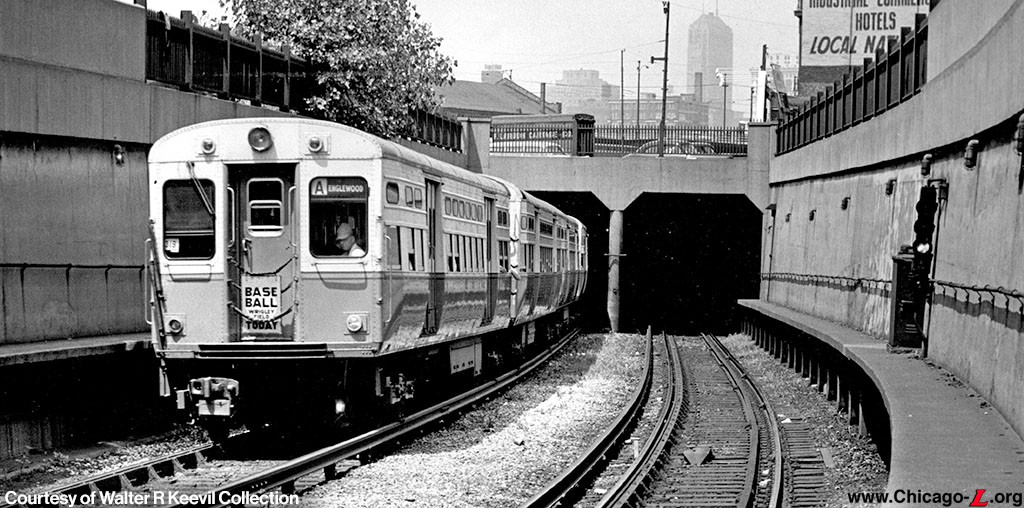
Although taken in July 1954, this view of the 6134 leading a southbound train out of the State Street Subway (near 13th Street) also shows the standard signal and trip installation location adopted with the opening of the subway in 1943. On Track A (normal northbound) to the right of the 6134, you can see a signal displaying a stop aspect, with its associated trip (between the third rail and the running rail) in the "up" position. The US&S air trip mechanism is located between the guard rails of this track.
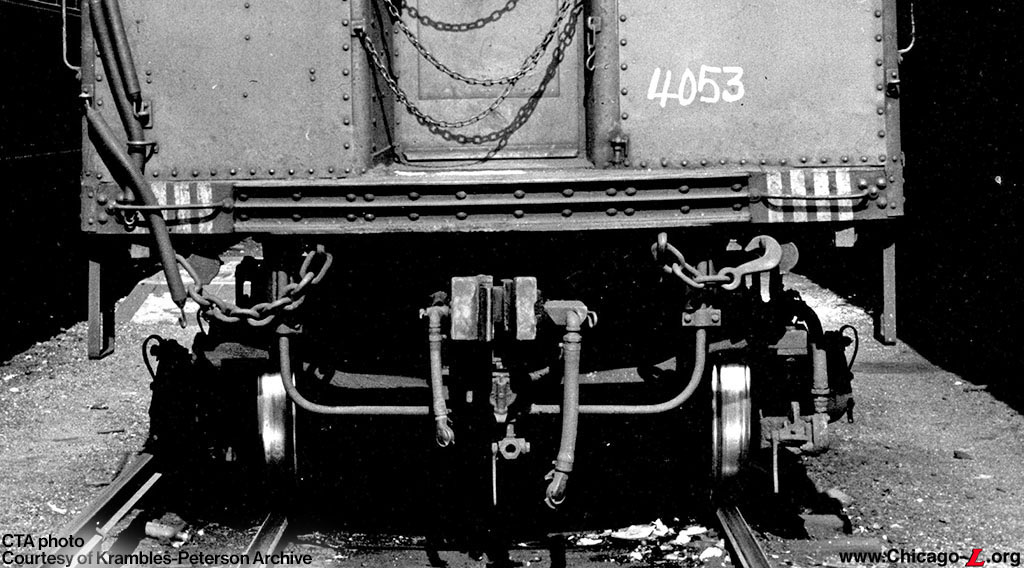
Car 4053 was photographed as part of CTA's creation of the March 1951 "Equipment File" photographs. Good undercar lighting of this view shows both the center trip (in line below the coupler) and the side trip to the right of the right-hand running wheel. The air cocks that would engage a raised trip also show to advantage in this view. The four-stripe marking (on either side of the car's anticlimber) indicates it has received remote door control equipment.
Though the city wanted to move forward with completion of the Milwaukee-Dearborn Subway during the spring of 1943, CRT had to advise the city that it did not have any suitable equipment with which to operate a second subway line at that time. All 455 steel cars would be required for the State Street Subway and CRT saw no prospects for being able to order suitable and sufficient new equipment.
North Shore Line and Chicago Aurora & Elgin rolling stock never received the side trip equipment. An April 1943 memo from CRT's Engineer Car Equipment noted that North Shore cars equipped with either Brill or Baldwin trucks, when operating with worn wheels, had the potential to interfere with the side trips.
The next equipment to join the CRT/CTA fleet were the three-section articulated trainsets supplied post-war by Pullman-Standard and St. Louis Car. These four carsets were equipped with center and side trip equipment. The two carbuilders differed slightly in the way they chose to attach the center trip equipment to these trains.
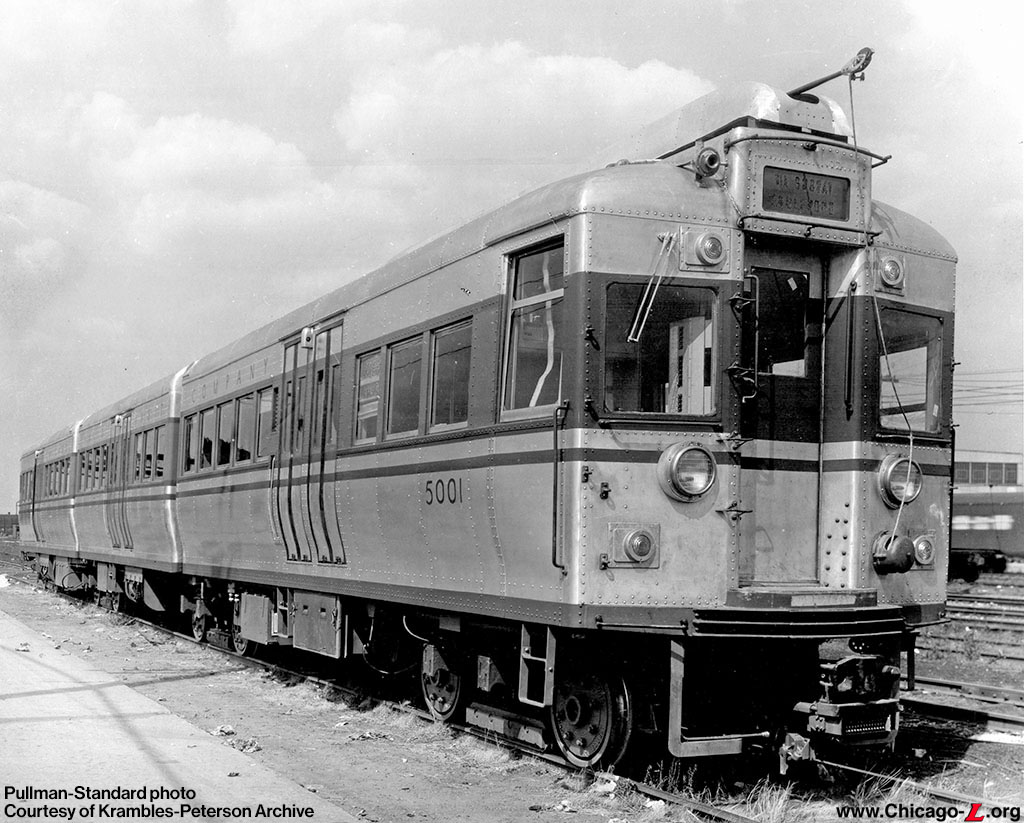
Pullman-Standard (PS) photographed CRT 5001 at its south side plant prior to delivering the car during September 1947, less than a month before CTA assumed control of the "L". The center trip equipment is visible below the coupler. The substantial bar stock framework attached to the carbody that was used to support the center trip is also evident.
The two PS-built articulated trainsets rode on Clark Special trucks.
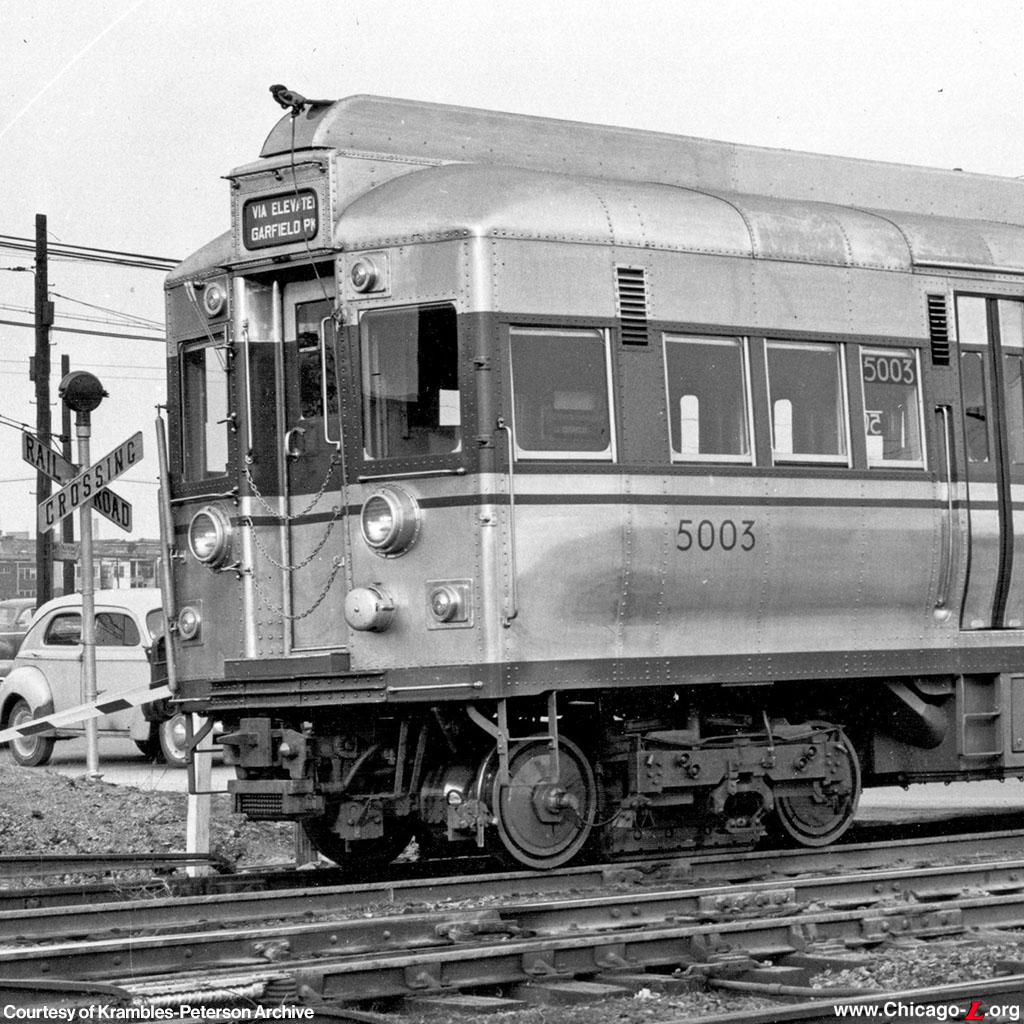
The St. Louis-built articulateds were delivered after CTA took over operations of the "L." In this 1948 view, the 5003 is coming off the loop track crossing Laramie Avenue westbound on the Garfield Park. St. Louis used a much-less-substantial appearing structure to support the center trip (the trip itself is below and slightly behind the coupler contacts). The side trip was truck-mounted and is visible immediately to the left of the leading wheel of the front truck (a St. Louis B-4 truck) in this view.
The practice followed for trip mounting with the four articulated trainsets dictated what would be done in CTA's first volume order of cars; the 130 married-pair PCCs delivered during 1950-51 from St. Louis Car. Initially, the 6001-6130 were to have carbody-mounted center trips mechanisms. However, by January 1951, CTA and the carbuilder had agreed on a change order to substitute truck-mounting for the center trip.
What caused the change? There's no specific, surviving paperwork, but it's likely that experience with the better suspension on the PCC equipment, as well as the higher acceleration and braking rates these cars offered, demonstrated to the Authority that it was possible for a carbody mounted trip to either fail to engage a wayside trip (by riding too high) or to engage the trip below the normal height of engagement, with the potential to cause more serious damage to the wayside and carborne components.
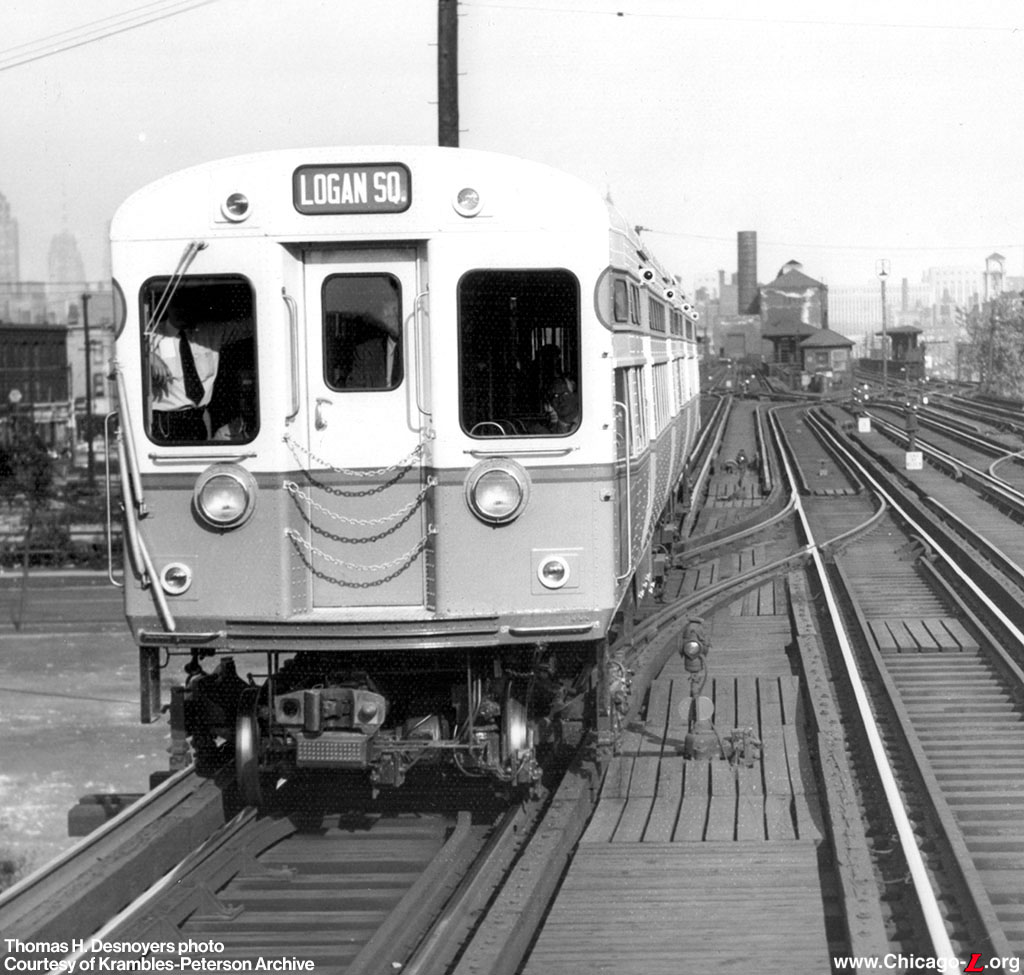
Tom Desnoyers's striking image of the brand-new 6001-02 was taken from the north platform at the Marshfield station on the "Met Mainline" on September 17, 1950.
With this pair having been built before the change order (described above) to a truck-mounted center trip, Tom's image shows the original arrangement of the center trip, using steel piping to create a framework from which to suspend the center trip. It's visible immediately to the right and slightly below the coupler in this view. The side trip can be seen ahead of the right-hand running wheel.
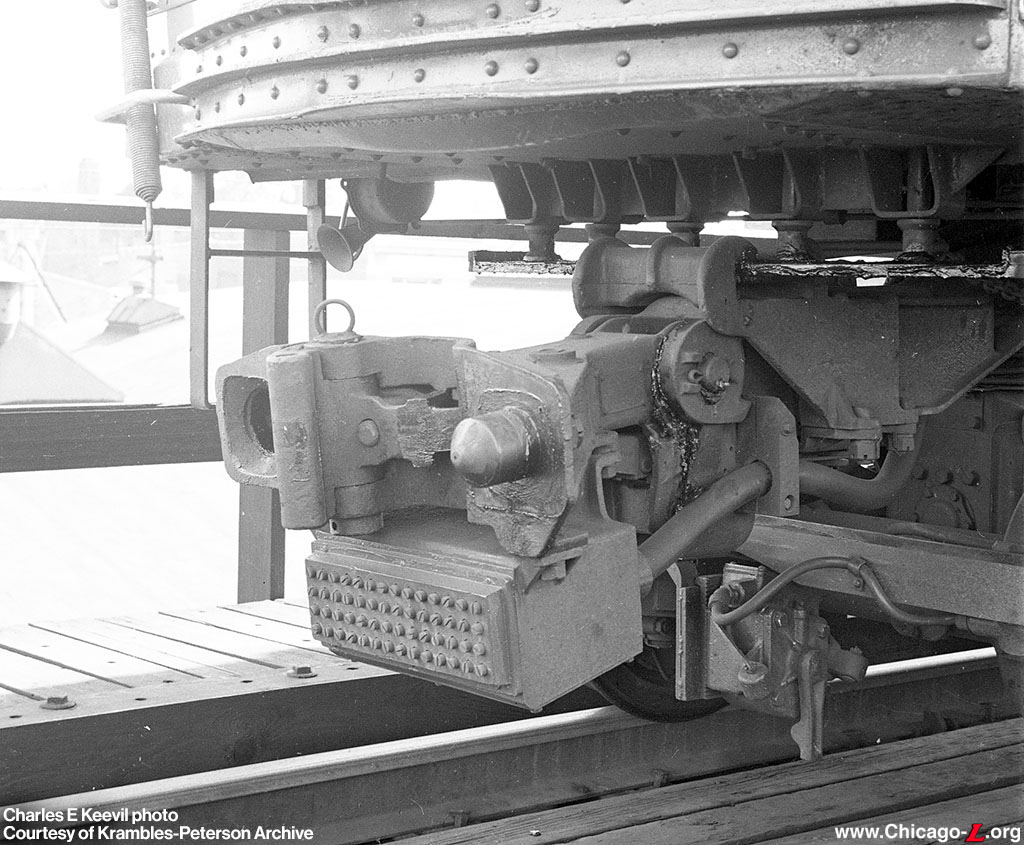
Modification of the cars built with the original carbody-mounted center trip is shown in this C.E. Keevil view of the 6034, taken on September 6, 1951. The relocated center trip equipment can be seen to right and below the coupler in this view. Your eyes don't deceive you! The coupler on the 6034 is drooping a touch. This was due to damage sustained in a collision. You can also see further evidence of damage along the ribs of this car's anticlimber.
As the fifties wore on, CTA's path forward in terms of equipment procurement became clearer, leading to the acquisition of a further 570 PCC-type rapid transit cars. This decision also allowed the Authority to proceed with a plan for the eventual elimination of the remaining wood-steel "L" cars and the associated center trip equipment.
By March of 1954, CTA Equipment Engineering issued an engineering letter which called for the removal of the center trip equipment from cars 6001-6200. This equipment would be reconditioned at Skokie Shops before being sent to St. Louis Car to be used on cars 6201-6450 (then in production). A little over one-half year later, Equipment Engineering was instructing the shops to remove the number 1 end trip yoke pipes and trip devices from cars 4001-4455. This was done coincident with the project to create married-pairs out of the Cincinnati-built steel car fleet.
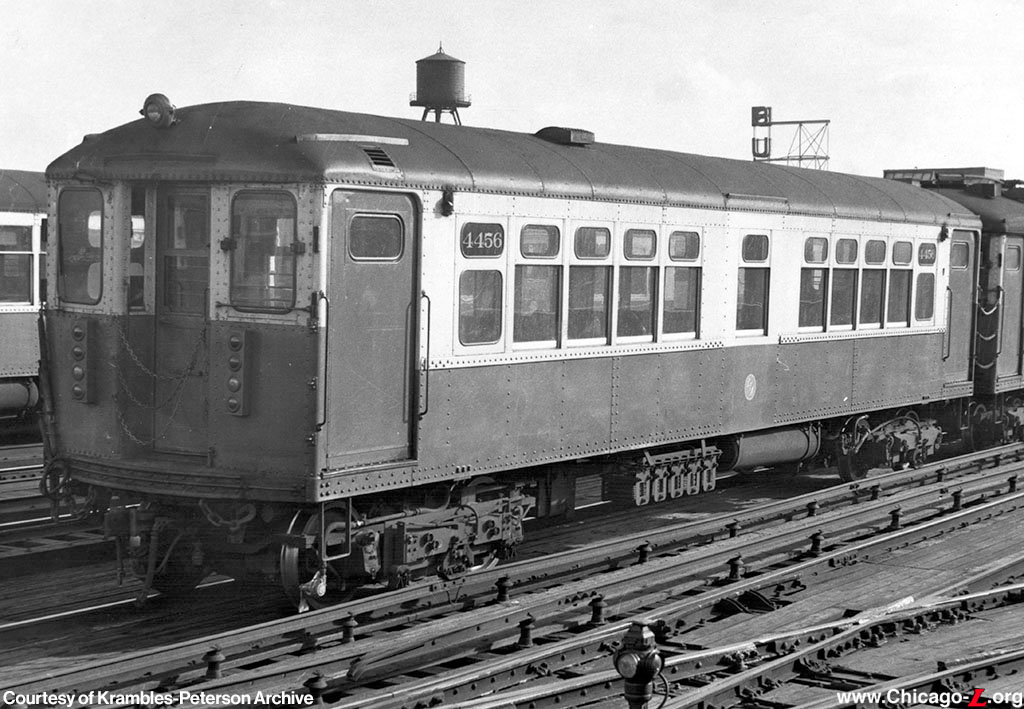
Car 4456 was a 1955 work product of Skokie Shops, combining electrical equipment from fire-damaged motor 4111 with the body of control trailer 4005. Photographed in the Logan Square Yard on December 27, 1956, this car reflects the Authority's policy to have only side trip equipment on the steel cars.
Center trip equipment continued to serve on some rapid transit lines, particularly those where wood-steel cars continued in operation.
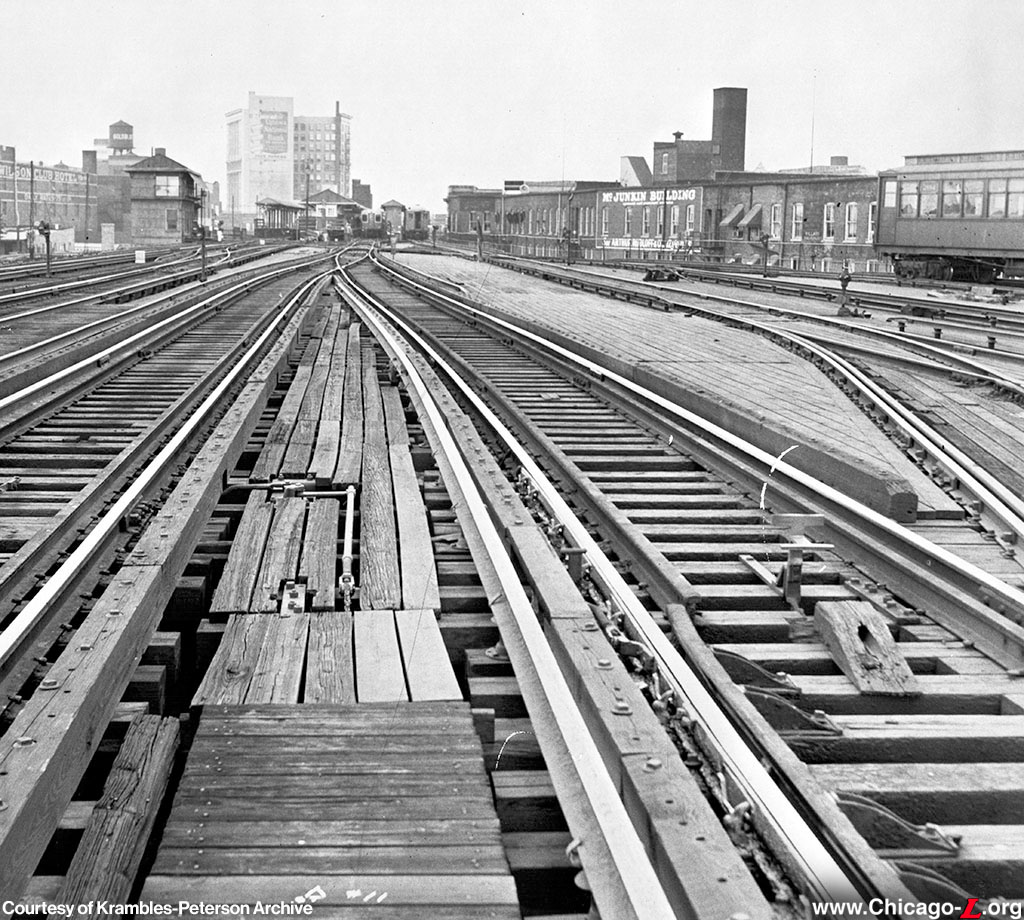
A center trip on Track 4 on approach to Wilson station is visible to the right of this November 1956 photograph. This was one of a sequence of views the CTA photographers took showing the surroundings and view as a train would have approached Wilson from the south. This sequence was produced in the wake of the November 5, 1956 collision between CTA and North Shore Line trains in the station platform.
The authors wish to acknowledge Walter Keevil's generous sharing of copies of various CRT and CTA correspondence dealing with the trip stop equipment and the operation of the subways. Walter also shared his uncle's photo of car 6034 from September 1951, which was essential to conveying the changes in those first few years by the CTA.
|
|
|
